If you’ve ever worked with radio signals, satellite gear, old Wi-Fi setups, or even some industrial sensor networks, you’ve probably run into weird, awkward connector mismatches. Maybe you had a new modem with an N-type port, but you needed to plug in an antenna with an older TNC connector— and you had no clue how to make them work. That’s where a TNC coax adapter comes in, and as someone who’s been supplying these little workhorses for years, I’m here to break it down plain and simple, no jargon overload, no confusing acronyms thrown at you out of nowhere. Coax Adapter
First, let’s start with the basics: what’s a TNC, anyway? TNC stands for “Threaded Neill-Concelman” — named after the two guys who designed it back in the 1950s. Unlike the way most modern connectors click into place (that’s BNC, for reference), TNC uses a threaded coupling mechanism. That might sound like a tiny detail, but it’s a huge deal for things that need a rock-solid, weather-resistant connection. Think of it like plugging a lamp cord into an outlet vs. screwing a hose onto a spigot: screwing it in tight means way less chance of wiggling loose from vibration, wind, or rough handling. That’s why TNC connectors stuck around for so long, especially in outdoor gear, aviation, military radios, and industrial automation—places where a dropped signal can mess up a whole system.
Now, a coax adapter, in general, is just a little device that connects two different types of coaxial cables, right? Coax cables are the ones with the center conductor, an insulator, a shield, and an outer jacket—designed to carry high-frequency signals without leaking or picking up interference. A TNC coax adapter, then, is the specific adapter made to pair TNC connectors with other types of coax connectors, or even two TNC connectors if you just need to extend a cable run. Wait, let’s clarify that: adapters aren’t just for mismatches. Sometimes people use them to fix a bad connector on a cable, or to make a short, specialized cable for a custom setup.
Let’s give you a real-world example to make this concrete. A few months back, a customer came to us panicking: he had a small base station for a rural farm’s IoT system (you know, the ones that track soil moisture, cattle temperature, and all that) and his old TNC antenna connector broke. He had a spare antenna with a TNC male connector, but his new base station had an RP-SMA port—smaller, click-on, super common on consumer Wi-Fi routers. He needed a way to plug the two together without buying an entirely new antenna or base station. That’s exactly where a TNC to RP-SMA adapter comes in. Simple, solves his problem, and it’s been working flawlessly through dust, rain, and farm equipment vibration ever since.
Another example: our military and aerospace customers, who are a big part of our business, don’t mess around with loose connections. They might have a TNC female port on a radio, and need to plug in a test instrument with an N-type connector. The adapter here has a TNC female end on one side and an N-type male end on the other, all threaded tight so even a rough landing or a bump in the truck doesn’t break the connection. These adapters aren’t just plastic and metal, either—we build ours with gold-plated center pins and nickel-plated bodies because gold conducts better, resists corrosion, and doesn’t corrode even after years of being outside in sun or snow. That matters for signal quality: if your adapter is cheap, it might cause signal loss, dropped connections, or even static that makes your radio or sensor useless.
Wait, let’s clear up a common confusion with TNC connectors: male vs. female. No, it’s not about the plastic housing—it’s about the center pin. A TNC male connector has a protruding center pin, and a TNC female has a hollow socket to hold that pin. That’s crucial for adapters, because plugging a male into a male won’t work (they’ll just hit each other) and same with female into female. So adapters are built to match: a TNC male to RP-SMA female, or TNC female to N-type male, etc. We get so many calls from people who grabbed the wrong adapter by accident, thinking “TNC is TNC,” but they mismatched the gender and it doesn’t fit. We always tell new customers: double-check the center pin, not the housing, to make sure you get the right one.
Now, what are the common types of TNC coax adapters you’ll run into? Let’s list the ones we supply most often, to give you an idea:
- TNC to N-type: The workhorse for high-frequency, industrial, and military setups. N-type is also threaded, so this combo is super reliable for signals up to 11 GHz or more.
- TNC to SMA (regular and RP-SMA): SMA is super common on consumer gear, IoT modules, and smaller radios, so this adapter bridges the gap between old TNC gear and new tech.
- TNC to BNC: BNC is the click-on connector you see on old TV cables, some security cameras, and older test equipment. If you’re working with retro gear or specific security systems, this is the adapter you need.
- Straight vs. right-angle: Most adapters are straight, but sometimes you need a right-angle adapter to fit into tight spaces—like a radio mounted in a small case where there’s no room for a cable to stick straight out. We have both, and we stock both so customers don’t have to wait weeks for a custom order.
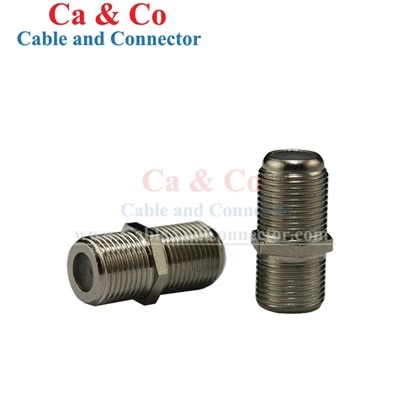
- Inline couplers: Wait, are couplers the same as adapters? Sometimes people use the words interchangeably, but an inline coupler is a type of adapter that connects two same-type connectors. So a TNC inline coupler is two TNC female ends (or two male ends, though that’s less common) that you screw together to make a longer cable. That’s perfect if you need to run a TNC cable 10 extra feet without buying a whole new cable.
Let’s talk about why these adapters aren’t just “random little parts” — they’re actually critical to signal performance. A bad adapter can cause VSWR (Voltage Standing Wave Ratio), which basically means your signal bounces back instead of going where it’s supposed to. That leads to weaker signals, dropped calls, sensors not sending data, or even equipment overheating. We test every single adapter we ship to make sure the VSWR is low—meaning almost all the signal passes through, no bouncing back. We use premium materials, too: low-loss dielectric inside the adapter, not cheap plastic, so the signal doesn’t degrade as it passes through. A lot of cheap adapters on Amazon skip these steps, and people buy them, then wonder why their setup isn’t working. We’ve had so many customers switch from cheap adapters to ours and immediately see a 10-15% improvement in signal strength— that’s how big a difference the right adapter makes.
Who uses TNC coax adapters, anyway? Let’s break it down by industry, since that’s what we see every day:
- Radio operators, ham radio folks, and GMRS users: A lot of older ham gear uses TNC connectors, while newer handheld radios might use SMA or even UHF. Adapters let them mix and match without replacing their whole station.
- Industrial IoT: As I mentioned earlier, farm sensors, factory equipment monitoring, pipeline sensors—all these use TNC connectors for outdoor, vibration-resistant connections. Adapters let them connect to test gear or different antenna types.
- Military and aerospace: TNC connectors are MIL-spec, meaning they’re built to survive extreme conditions. Adapters for these are also built to MIL standards, so we make sure every part meets those strict requirements.
- Security and surveillance: Some older security cameras and access control systems use TNC connectors, and if you’re upgrading a system, you might need an adapter to connect new cameras to old cables, or vice versa.
- Satellite and GPS: A lot of GPS antennas use TNC connectors, so if you’re mounting a GPS unit on a truck, boat, or drone, you might need an adapter to match the port on your navigation device.
Wait, let’s address a question we get a lot: is TNC still relevant with all the new connectors like USB or Wi-Fi’s U.FL? Yeah, definitely. Not all tech is moving to smaller, click-on connectors. Threaded connections just can’t be beat for high-vibration, high-temperature, outdoor use. Think about a wind turbine’s sensor: it’s 300 feet up in the air, exposed to -40°F in the winter, 100°F in the summer, and shaking from the wind nonstop. A TNC adapter here is way more reliable than any click-on connector—it won’t loosen, it won’t come unplugged. That’s why TNC is still going strong, even as smaller connectors get popular for indoor, low-stress use.
Another thing people don’t realize: these adapters aren’t just one-size-fits-all for cable size. Coax cables come in different gauges—like RG-58, RG-8, RG-174, etc.—and each has a specific center pin size. A good TNC adapter will be made to fit a specific cable gauge, so the center pin fits snugly into the cable’s center conductor, and the shield lines up perfectly. If the adapter is too loose, you get signal loss; too tight, and you could damage the cable. We stock adapters for the most common cable gauges, and we label each one clearly so customers know which cable it works with. If you’re not sure, just shoot us a message, and we’ll tell you exactly which adapter you need.
Now, let’s talk about what to look for when you’re buying a TNC coax adapter, because not all adapters are equal. First, don’t just buy the cheapest one you find. A cheap adapter might have a nickel-plated body instead of gold, or a loose center pin, or bad internal shielding. That leads to signal loss, as I mentioned earlier, which can cost you way more than a decent adapter in dropped equipment, missed data, or repair bills. Second, check the gender: make sure you know if your connectors are male (pin out) or female (socket in)—that’s the #1 mistake customers make. Third, think about the environment: if your adapter is going outdoors, make sure it’s weatherproof, or at least has a tight seal to keep moisture out. We sell weather-sealed TNC adapters that are IP-rated for outdoor use, so they won’t rust or corrode. Fourth, if you need a right-angle or inline coupler, don’t hesitate to get that instead of a straight adapter— it might save you a lot of headache fitting it into your setup.
At the end of the day, a TNC coax adapter is a tiny, often overlooked part, but it’s the glue that holds a lot of critical signal systems together. It’s the thing that lets you connect a new antenna to an old radio, extend a cable run without extra cost, or mix different connector types without replacing your whole gear. For us, it’s not just selling a small part—it’s making sure our customers’ systems work reliably, no matter where they are or what they’re doing.
If you’re not sure which adapter you need, or you have a custom request (like a specific length, or a rare connector combo), don’t hesitate to reach out. We’re here to help you pick the right part for your setup, no matter how big or small.
ADSS Cable References
- Microwave Journal. (2022). Coaxial Connector Technology for High-Frequency Applications.
- MIL-STD-177F. (2018). Military Specification: Connectors, Electrical, Coaxial, Radio Frequency.
- Institute of Electrical and Electronics Engineers (IEEE). (2020). Standard for Coaxial Connectors for RF and Microwave Applications.
- Telecommunications Industry Association (TIA). (2019). Coaxial Adapter Performance Standards for Industrial and Commercial Use.
Zhejiang Cable and Connector Optic Co., Ltd.
As one of the most professional coax adapter manufacturers and suppliers in China, we have world-leading production equipment and strong manufacturing capabilities. Please rest assured to wholesale custom made coax adapter at competitive price from our factory.
Address: 1517 East Communications Building, No.398, Wensan Road, Xihu District, Hangzhou City, Zhejiang Province, China.
E-mail: Sales@CableAndConnector.com
WebSite: https://www.zjcableandconnector.com/
