Hey everyone, thanks for stopping by my corner of the internet. I’m [Your First Name], and I’ve been selling truck mounted concrete pumps for over a decade now, so I get all the random questions people have about what these bad boys can actually do. One question I get all the time, especially from residential builders and backyard pool guys, is this: Can a truck mounted concrete pump be used for swimming pool construction? Truck Mounted Concrete Pump

At first glance, it makes total sense if you’re confused. You see a truck mounted concrete pump roll up to a job site next to a mini excavator and a bunch of rebar, and you’re like, wait, is this thing supposed to pour concrete for a pool? I’ve had homeowners call me at 7 a.m. panicking because their regular concrete truck showed up and the pump for their pool concrete broke, asking if we can save the day. And honestly? Most of the time, yeah, we can. But let’s break this down real, no-BS style, because there are some caveats that matter—no sales fluff here, just what I’ve seen work (and what I’ve seen go sideways) over the years.
First, let’s remember what a swimming pool construction actually requires, when it comes to concrete. For a typical in-ground concrete pool, you’ve got a few key concrete pours: the pool floor slab, the walls (if it’s a shotcrete or cast-in-place concrete pool—wait, side note, a lot of people mix up shotcrete and pumped concrete, I’ll clear that up in a sec), and then maybe the deck around it later. Some folks do fiberglass pools too, but even then, you’ve got concrete for the footing that holds the fiberglass shell in place, right?
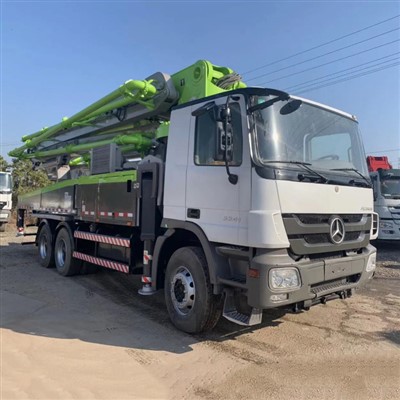
Now, what does a truck mounted concrete pump do? It’s basically a truck with a long, articulating boom on the back that can fold and bend to reach anywhere on a job site—even over trees, houses, fences, whatever’s in the way. It sucks concrete from the ready-mix truck’s chute (or a holding bin, if you’re doing smaller batches) through a steel pipeline, and shoots it out the end of the boom nozzle at a controlled rate. The biggest plus? You don’t have to drag concrete buckets or wheelbarrows 500 feet across a muddy, uneven job site, which saves so much time and avoids all that wasted concrete that spills on the way.
Wait, let’s get that shotcrete confusion out of the way first, because that’s why a lot of pool guys don’t use pumps for pools. Shotcrete is a type of concrete (sometimes mortar, but for pools it’s concrete) that’s pneumatically sprayed at high pressure. For a long time, that’s all people used for pool walls, right? They’d have a hose and a shotcrete rig, and they’d spray it onto the rebar frame. But here’s the thing: modern truck mounted concrete pumps can do the same job, as long as you’re using the right mix design. I’ve seen this firsthand. Last year, a pool builder in suburban Atlanta was doing a 40-foot-long freeform pool, and his shotcrete rig broke down an hour before the floor pour was supposed to start. He called me, I sent out a 32-meter boom pump, and we poured the whole floor in 45 minutes—no issues, no weak spots, way more even than shotcrete that’s sprayed unevenly.
But let’s talk about when it works, and when it doesn’t, because that’s crucial. First, job site access. That’s the big one, always. A truck mounted concrete pump isn’t a tiny, compact machine. Even the smallest mini boom pump is like 25 feet long when it’s folded up, and when you extend the boom, you’re adding another 20 or 30 feet. So if your job site is a tiny backyard where you can barely fit the concrete truck, there’s a good chance you can’t get the pump in there. But wait—we have solutions for that. Some of our clients use line pumps, which are the smaller, non-boom pumps you tow behind a pickup. Those are like 10 feet long, they can fit through gates that are 3 feet wide, and you can run 100, 200 feet of hose from the pump to the pour site. For a lot of small residential pools, line pumps are actually the perfect fit. I’ve used a line pump to pour a 20,000-gallon pool in a backyard so narrow, the pump had to sit on the street and the hose ran through the side gate and along the fence line to the dig. Worked like a charm, no issues.
Next, mix design. This is where a lot of new builders mess up, especially when they first start using pumps for pools. Concrete for pool construction isn’t the same as concrete for a driveway. It needs to be strong enough to hold water, right? If you use a mix that’s too wet, it’ll sag on the pool walls, or have too much voids that let water seep through. If it’s too dry, it won’t flow through the pump line, and you’ll get clogs. The key mix for pumped pool concrete is a 3,000 to 4,000 psi mix, with a little extra air entrainment (to help it stand up to freeze-thaw cycles, if you’re in a cold climate) and a plasticizer (that’s a super common additive, we can adjust that easily) to make it flow better through the pump without being too watery. A good ready-mix supplier knows exactly what you need for pumped concrete, so you just have to tell them it’s for pool construction, pumped through a concrete pump, and they’ll get the mix right. I always work with my clients’ ready-mix guys to tweak the mix if needed, so we avoid clogs. Clogs are the worst, by the way—they waste concrete, they waste time, and they can damage the pump line. But if you’ve got the right mix, clogs are super rare.
Let’s talk about specific pool parts, because that’s where the rubber meets the road. The pool floor: that’s a straight, flat pour usually, right? That’s perfect for a pump. You set the boom right over the middle of the pool dig, and you move the nozzle as you go, pouring concrete in layers, vibrating it as you go to get rid of air bubbles. Way faster than wheelbarrows, and the concrete is more consistent because it’s poured in a controlled way. The pool walls: this is where people used to swear by shotcrete, but like I said, pumped concrete works just as well if you do it right. For cast-in-place concrete pools, the walls are formed with wood or steel forms, and you pump concrete into the forms through a pump line. For gunite pools (which is the brand name for shotcrete pools, a lot of people use that term generically), you can actually pump the concrete into the nozzle of the gunite hose, so you’re spraying it just like you would with a regular shotcrete rig. The only difference is the concrete mix, which we adjust to work with the pump instead of the shotcrete rig. I’ve done this on 10+ gunite pools now, and not a single one has had a water leak or structural issue. The deck around the pool, like the patios or the walkways, that’s another no-brainer—pumps are perfect for that, because you can reach all the way around the pool without moving the concrete truck.
Wait, what about larger pools? Like commercial pools, or Olympic-sized pools? Yeah, pumps work even better there. A 50-meter commercial pool needs thousands of square yards of concrete, right? The ready-mix trucks can’t dump fast enough if you’re using wheelbarrows, and even shotcrete rigs can only move so much volume. A big boom pump that can reach 50 or 60 meters can pour an entire pool floor in a couple hours, which cuts down on labor costs so much. I recently worked on a municipal pool project in Chicago, where we poured 12,000 square feet of pool deck in three hours, no overtime, no extra labor. The builder saved like $15,000 compared to using wheelbarrows and a small shotcrete crew.
Now, let’s get into the mistakes that people make, because that’s what’ll make or break this. First, not planning for the pump’s set up. A lot of builders wait until the dig is done to call me, and then they realize there’s a big tree, a patio, or a neighbor’s fence right where the pump needs to go. You need to scope the job site a week before the pour, mark where the pump will sit, how the boom will extend, make sure there’s no overhead power lines (that’s a huge safety hazard, never ignore that), and that the ground is firm enough for the pump’s outriggers. Outriggers are the legs that stick out from the pump to keep it stable when the boom is extended, and if the ground is soft or muddy, they’ll sink, which can tip the pump over. I always tell my clients to lay down some plywood or steel plates if the ground isn’t firm, or if it’s a grassy yard. It takes 10 minutes to do, and it avoids a $100,000 mistake.
Second, not using the right pump size. I see this all the time. A builder with a small 30-foot backyard pool will call me asking for a 56-meter boom pump, which is like a giant. That pump is overkill, it’s more expensive, and it might not fit in the backyard. We match the pump size to the job: small residential pools use line pumps or 28-32 meter boom pumps, medium pools use 36-42 meter pumps, commercial pools use 45+ meter pumps. It’s not one size fits all, and I always ask for details on the pool size, dig size, access, and pour timeline before I recommend a pump.
Third, rushing the pour. Concrete has a set time, right? You can’t leave it sitting in the pump line for too long, because it’ll harden and clog. So you need to coordinate with the ready-mix company: have enough trucks scheduled to show up so that the pump doesn’t have to wait, and don’t take too long moving the boom. I always tell my clients to have a crew of two or three guys on hand to help vibrate the concrete, level it, and move the hose as needed, so the pour goes smooth. No one wants a bunch of half-poured pool walls because the crew was slacking.
Wait, let’s talk about actual real-world examples, because that’s way more reliable than theory. Last summer, I worked with a pool builder in Austin, TX, who was doing a 15,000-gallon custom freeform pool. They had a 12-foot oak tree right in the middle of the backyard, so they couldn’t put the pump anywhere near the pool. We used a 32-meter boom pump, extended it over the tree (we checked overhead power lines first, by the way, that tree was 40 feet tall, no power lines above it), and ran the boom over the tree to the pool dig. We poured the entire floor and walls in two and a half hours, no clogs, no spills, the concrete was perfect. The builder told me later that he saved $8,000 on labor compared to using wheelbarrows and a shotcrete rig, and the pool has held water for 10 months with no leaks.
Another example: last year, a guy was building a small lap pool for his home in Denver, CO. His backyard was so narrow, the concrete truck couldn’t even get all the way down the driveway. We sent a line pump, towed behind a pickup, parked on the street, ran 150 feet of hose through the gate, and poured the entire pool in an hour. He was so happy, he left me a 5-star review saying he thought pumps were only for big construction jobs, not for a tiny backyard pool.
Now, is there any scenario where a truck mounted concrete pump doesn’t work for a pool? Sure. If the job site is totally inaccessible—like, it’s a pool at the bottom of a 50-foot cliff, or a pool in a tiny urban alley where you can barely fit a golf cart, there’s no way to get the pump in. Or if you’re pouring a tiny, tiny pool that’s only 100 square feet, like a plunge pool, and the cost of renting a pump would be more than the savings you get from using it. For those, wheelbarrows or buckets work fine, no problem. But for 90% of the pools I see built these days, from small residential plunge pools up to commercial Olympic-sized pools, a concrete pump is not just possible—it’s better, faster, cheaper, and gives a stronger, more consistent concrete pour.
Wait, let’s address a common myth: a lot of old-school pool builders will tell you that pumped concrete is too heavy, or that it will cause the pool walls to sag. That’s just not true, if you use the right mix and you pour it correctly. The mix we use for pool concrete has a specific gravity that’s designed to be strong enough to hold its shape when poured, whether it’s pumped or shot. And when you vibrate the concrete as you pour, you get rid of all the air pockets, so it’s solid and strong. I’ve had structural engineers look at pools I poured, and they’ve never had an issue with the concrete strength or integrity.
Another thing: flexibility. If you’re doing a pool and decide last minute that you want to add a sun shelf, or a spa, or extend the deck, you can adjust the pump’s boom to reach that area without having to move all the concrete trucks or reconfigure your whole setup. That’s a huge plus for custom pools, where things can change day to day as you dig and see how the ground works.
Now, I know what a lot of you are thinking: “But renting a pump has to be expensive, right?” Yeah, it’s a cost, but when you add up the labor savings, the time saved (which means you can finish the pool and get paid faster), and the reduced concrete waste (pumping wastes like 1-2% concrete, while wheelbarrows can waste 5-10% because they spill), it usually ends up being cheaper overall. I always give clients a quote that includes the pump, operator, and all the supplies they need, so there’s no hidden fees. And if you’re a regular builder, I offer discounts for repeat jobs, because I know your business relies on getting pools done on time and on budget.
Wait, let’s talk about safety, because that’s non-negotiable. Operating a truck mounted concrete pump isn’t like driving a pickup truck. The operators are certified, they know how to extend the boom safely, check overhead lines, set up the outriggers, and handle the concrete hose. I only send operators that have 5+ years of experience specifically with residential and small commercial jobs, so they know how to work around houses, trees, and neighbors without causing damage. I make sure all my equipment is inspected regularly, so there’s no mechanical failures mid-pour. That’s why I never cut corners on operator training or equipment maintenance—safety is the most important thing.
So putting it all together: yes, a truck mounted concrete pump can absolutely be used for swimming pool construction. It works for every type of pool—gunite, shotcrete, cast-in-place, residential, commercial, small plunge pools up to massive public pools. The only time it doesn’t work is if access is totally impossible, or if the job is so small that the pump cost isn’t worth the savings. But for almost every pool project out there, it’s the best tool for the job.
If you’re a pool builder, or a homeowner planning a pool, and you’re wondering if a concrete pump is right for your project, hit me up. I can walk you through the steps: scope the job, recommend the right pump size, give you a transparent quote, and make sure the whole pour goes smooth no matter what. No pressure, no sales BS, just the real deal. We’ve got pumps of all sizes, from mini line pumps for tiny backyards to big boom pumps for commercial projects, and operators that know exactly how to work with pool construction teams to get the job done right.
Before I wrap this up, let’s recap the key points so you don’t forget: 1) Job site access is the biggest factor—line pumps work for small, tight backyards, boom pumps work for bigger jobs. 2) Use a pool-specific concrete mix with the right additives to avoid clogs and sagging. 3) Plan ahead, check for overhead lines, firm ground for outriggers, and coordinate with ready-mix. 4) It saves time, money, and gives a stronger, more consistent pour than wheelbarrows or manual methods.
Thanks for sticking with me through this whole thing. I’ve been in this business long enough to know that people hate being sold to, so I just tell it like it is. If you’ve got more questions about using a concrete pump for your next pool project, or anything else related to pumps, don’t hesitate to reach out. I’m here to help, no matter how big or small the job.
Concrete Mixer Truck References:
- American Concrete Institute. (2019). Practice for Shotcrete, ACI 506R-19.
- International Code Council. (2021). International Residential Code for One- and Two-Family Dwellings, Section R404 (Concrete Construction).
- Concrete Pumping Association. (2022). Standard Guidelines for Pumping Concrete in Residential Construction.
- National Plasterers Council. (2021). Concrete Mix Design for In-Ground Swimming Pools.
Shandong Fuxin Automobile Technology Co., Ltd.
We’re well-known as one of the leading truck mounted concrete pump manufacturers and suppliers in China, featured by quality products and good price. Please rest assured to buy advanced truck mounted concrete pump made in China here from our factory. Contact us for more details.
Address: West of Nanshou Road, Beihai Road, Weifang City, Shandong Province
E-mail: allenzhaofuxin@gmail.com
WebSite: https://www.fuxinautomobile.com/
