Hey folks, if you’re in the market for a T Structure HMC (Horizontal Machining Center) – or already rock one and wondering which CAD/CAM tools actually play nice with it, you’ve come to the right spot. I’m on the team that builds, sells, and supports T Structure HMCs full-time, so I’ve talked to hundreds of shops that struggled with CAD/CAM mismatches, weird post processors, or tools that just can’t handle the T Structure’s unique design features. Let’s cut the jargon and get straight to what works, what doesn’t, and why it matters for your shop’s bottom line. T Structure Hmc Machine
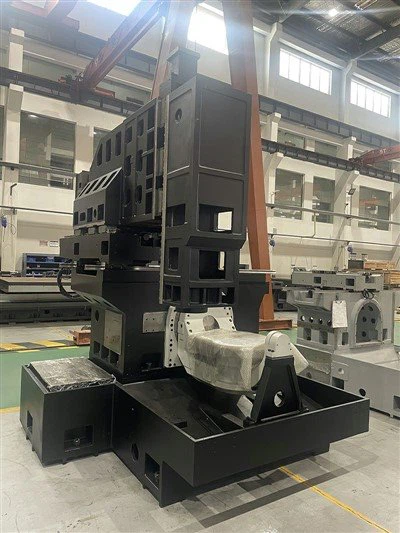
First, let’s get one thing out of the way: T Structure HMCs aren’t your average vertical machining center (VMC). Their frame’s built for heavy, long-running jobs – think aerospace parts, big automotive tooling, or heavy equipment components – with that rigid T-shaped column and cross-slide setup that eliminates the sway you get on some HMCs. That rigidity means you can run higher feeds and deeper cuts, but only if your CAD/CAM can translate your design into toolpaths that respect the HMC’s axis limits, rotary table indexing, and chip evacuation needs. A bad CAD/CAM choice here won’t just slow you down – it’ll crash the HMC, waste material, or turn a 2-day job into a week-long mess.
Let’s start with the tools that have proven themselves time and again with our T Structure HMCs. First up: Mastercam. Yeah, I know, it’s a common name, but hear me out. Mastercam has dedicated post processors specifically for T Structure HMCs – not generic ones you have to tweak for 3 hours after downloading. The team at Mastercam works directly with HMC manufacturers (shoutout to our engineering teams who collaborated on those posts) to make sure toolpaths for 3+2 axis machining, contouring, and deep pocketing align perfectly with the T Structure’s axis travel and rotary table positions. A lot of our customers run Mastercam for their milling and turning operations, and the seamless integration means they can send a design straight from CAD to the HMC without reworking code. One shop we work with – a custom aerospace parts maker – told us they cut their programming time for titanium brackets by 20% just because Mastercam’s T Structure posts handle the rotary indexing automatically, no manual code edits. That’s a win, right?
Next, Fusion 360. Now, don’t sleep on the free tier or even the personal plan – it’s not just for hobbyists. Fusion 360’s cloud-based CAD/CAM works great for T Structure HMCs, especially if your shop is small or you’re just testing out the HMC before scaling. The key here is the “Manufacture” workspace, which has built-in HMC-specific toolpath strategies: Adaptive Clearing for heavy material removal, Rest Machining for tight corners, and 3+2 axis finishing that accounts for the T Structure’s column clearance. The best part? If you run into a glitch with the post, Fusion 360’s post processor editor is super user-friendly – no need for a degree in G-code to adjust it for your specific T Structure HMC model. We’ve had a few startup shops pick Fusion 360 first because it’s affordable, and once they outgrow it, they can transition to something more powerful without redoing all their toolpath logic. That’s a big plus for shops that don’t want to switch tools every 2 years.
Wait, let’s not skip SolidWorks CAM either. A lot of our customers already use SolidWorks for CAD, so having a CAM tool that’s built right into it is a game-changer. SolidWorks CAM has a dedicated HMC module that’s optimized for T Structure designs – it lets you set axis limits, define the rotary table’s home position, and generate toolpaths that avoid the T column’s sides. The big sell here is no data translation: if you design a part in SolidWorks, you don’t have to export it to a separate CAD tool to get it CAM-ready. That eliminates errors from file conversion – which is a huge cause of crashes when you’re working with big, complex parts on a T Structure HMC. We had a tool and die shop tell us they used to get 1 or 2 file conversion errors per job before switching to SolidWorks CAM, and now they’re almost zero. That means less downtime, less scrap, and more parts out the door.
Now, let’s talk about tools that don’t work as well – and why you should avoid them for T Structure HMCs. For example, some generic CAM tools, the ones that work for VMCs but don’t have HMC-specific post processors. I’ve seen shops try to use a generic post and end up with toolpaths that tell the T Structure HMC to move the cross-slide all the way to the right while the rotary table’s rotated 180 degrees. That’s a crash waiting to happen – not just broken parts, but a $100k+ HMC out of commission for a week. Avoid any CAM tool that doesn’t have a dedicated post for your exact T Structure model. Generic “HMC” posts are a cop-out, most of the time they don’t account for the T’s rigid column’s travel limits or chip management.
Another one to skip: old, legacy CAM tools that haven’t been updated for modern HMC features. Our new T Structure HMCs come with things like live tooling, through-spindle coolant, and extended axis travel – if your CAM tool hasn’t had an update in the last 3 years, it probably can’t handle those features. I had a customer last year who was running a 10-year-old CAM program, and it couldn’t generate toolpaths for the through-spindle coolant ports on their T Structure HMC, so they had to add them manually with a drill press. That took an extra hour per part, which adds up when you’re making 100 parts a day. Stick to tools that get regular updates from the developer.
Wait, there’s a middle ground: tools that work well if you customize them, but they’re not plug-and-play for T Structure HMCs. Things like PowerMill, Edgecam, and GibbsCAM. These are powerful tools, but they need a lot of tweaking – their default posts aren’t set up for T Structure HMCs, so you’ll need a skilled programmer to adjust the post, define the machine’s kinematics, and test every toolpath. If you’ve got a big shop with a dedicated CAM programmer, these tools can work great – they’re perfect for 5-axis heavy-duty machining that the T Structure HMC is built for. But if you’re a small shop with one person who does design and programming, you’re better off going with Mastercam, Fusion 360, or SolidWorks CAM because they have less of a learning curve and less setup time.
Let me also throw in a few pro tips that I’ve picked up from supporting T Structure HMCs over the years. First, always test your post processor with a simple square part before running a big, expensive job. That way, if there’s a bug, you catch it before you ruin a block of titanium or aluminum. Second, make sure your CAD/CAM tool lets you simulate the entire machining process – not just the tool path, but the machine itself. A lot of modern T Structure HMCs have a simulation feature that can mirror your CAD/CAM’s simulation, so you can see if the tool will collide with the T column, the rotary table, or the vise before you hit cycle start. Third, if you’re not sure which tool is right for you, reach out to us. We don’t just sell T Structure HMCs – we work with all the major CAM providers to make sure their posts are optimized for our machines, and we can give you tailored recommendations based on your shop size, the parts you make, and your budget.
At the end of the day, the right CAD/CAM for your T Structure HMC comes down to two things: ease of use for your team, and compatibility with your HMC’s unique features. A good CAM tool will turn the T Structure’s rigidity into an advantage – letting you run faster, deeper cuts, with less scrap and less downtime. A bad one will turn that rigid machine into a headache.
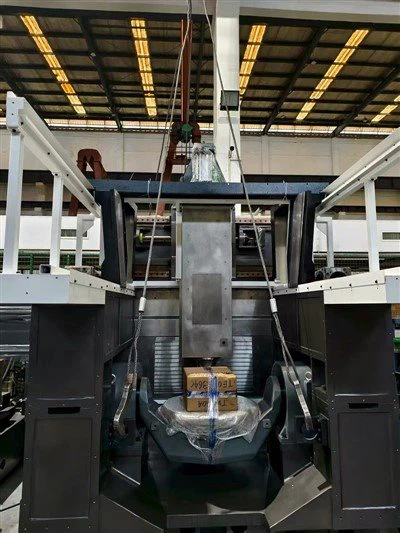
If you’re in the market for a T Structure HMC, or you’re looking to upgrade your CAD/CAM to get the most out of the one you already have, don’t guess – reach out and let’s chat. We can walk you through which tools work best for your needs, answer any questions about post processors or machine compatibility, and even set up a demo so you can test a CAD/CAM tool with our T Structure HMC before you make a decision.
T Structure Hmc Machine References
Mastercam. (2024). T Structure HMC Post Processor Optimizations. Mastercam Inc.
Autodesk. (2024). Fusion 360 Manufacture for Horizontal Machining Centers. Autodesk Inc.
SolidWorks Corp. (2023). SolidWorks CAM HMC Module: T Structure Frame Compatibility. Dassault Systèmes.
Mazak. (2024). T Structure HMC Kinematics and CAD/CAM Integration Guidelines. Yamazaki Mazak Corporation.
GibbsCAM. (2024). Custom Post Development for Horizontal Machining Centers. Cimatron Ltd.
Smartech Machinery & Equipment Co., Ltd.
As one of the most professional t structure hmc machine machine manufacturers and suppliers in China, we also support customized service. Please rest assured to buy bulk t structure hmc machine machine made in China here from our factory. Contact us for more details.
Address: Room 2832, Changping Commercial Mansion, Shihua Road, Futian Free Trade Zone, Shenzhen, China
E-mail: smartech@smartechcnc.cn
WebSite: https://www.smartech-cnc.com/
