If you’ve ever dug into the world of global power infrastructure, chances are you’ve stumbled across terms like “SA Standard Plug Pin” and “Type C plug” while comparing products for manufacturing, importing, or large-scale procurement. As a long-time supplier of SA Standard Plug Pins, I get asked this question every week—often from engineers sourcing components for appliances, facility managers upgrading commercial spaces, or small business owners trying to avoid compatibility headaches. The confusion makes sense: both are two-pronged, low-voltage plugs used around the world, but their origins, design, regulatory purposes, and use cases are distinct. Let’s break this down, no jargon, no generic marketing fluff—just the real-world differences I’ve seen in 12 years in the industry. Sa Standard Plug Pin
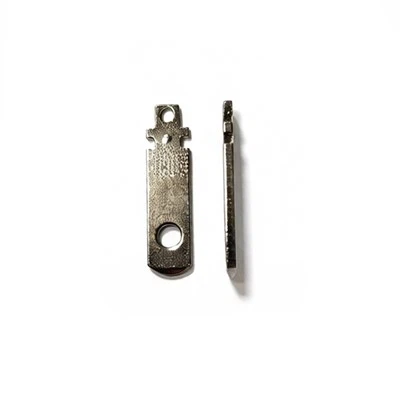
First, let’s ground this in geography and regulation, because that’s where the first line of divergence happens. The “SA” in SA Standard Plug Pin doesn’t stand for South America, as some people guess (though it’s popular there)—it’s short for South Africa, the country that developed and codified this standard for domestic and industrial use decades ago. It’s the official plug standard for South Africa, Namibia, Lesotho, and Eswatini, regions where electrical grids operate at 230V AC, 50Hz, matching most of Europe, Africa, and Asia. The South African Bureau of Standards (SABS) enforces this standard, so any SA Standard Plug Pin sold or used in these countries has to meet strict dimensional and safety criteria: that means solid brass pins (we use 99.9% pure brass for our pins, not plated steel, which is a common shortcut some cheaper suppliers take), a diameter of 6.35mm, spaced 17.5mm apart center to center, with a length of at least 8mm to ensure a secure, low-resistance connection. There’s also a grounding pin requirement for fixed industrial and high-wattage residential appliances, though the two-pin ungrounded version is the most common for small items like phone chargers, lamps, and kitchen gadgets.
Type C, on the other hand, is a universal travel plug standard recognized by the International Electrotechnical Commission (IEC) as IEC 60906-1, and it’s the most widely used plug in Europe, Latin America, and parts of Asia. It’s also sometimes called the “Europlug,” and that’s a perfect nickname because it was designed specifically for cross-border travel—no need for multiple adapters when moving between EU member states or countries that adopt the IEC standard. Type C pins are much smaller than SA Standard Plug Pins: their diameter is just 4.0mm, spaced 19mm apart, with a shorter pin length of 7mm. Unlike the SA standard, Type C is an ungrounded plug, which means it’s only rated for low-wattage devices (usually up to 2.5A, or 575W at 230V) and never for high-power equipment like space heaters, washing machines, or ovens. That’s a critical point: even though both work on 230V, their current ratings are night and day. I’ve had customers bring me broken Type C pins from travel adapters that tried to draw too much power for a space heater, which melted the plastic housing and posed a fire risk—something that would never happen with SA Standard Plug Pins, which are rated for 10A (2300W) for most standard residential applications, and 15A for industrial variants.
The next big difference is construction and durability, something I’ve seen play out on factory floors and in homes every single day. SA Standard Plug Pins are built for heavy, long-term use. The pins themselves are solid, not hollow, because they need to withstand being inserted and removed thousands of times without bending or loosening. Our pins are also tin-plated to resist corrosion—important for South Africa’s coastal regions, where salt air can eat away at unplated metal over time. The insulation around SA plug pins is usually made of heat-resistant thermoset plastic, which can handle temperatures up to 120C, so it doesn’t warp when plugged into space heaters or blenders that run hot. Type C pins, by contrast, are designed for light, occasional use: their pins are often hollow (plated brass, not solid) to cut costs, and the plastic housing is thermoplastic, which can melt if exposed to even minor overheating. I once worked with a distributor who imported a batch of cheap Type C power strips that failed SABS testing for a project in Johannesburg—they couldn’t handle the 10A draw from office equipment, and the pins bent when being pulled out of the wall, which is not a problem with our SA Standard Plug Pins, tested to 10,000 insertion and removal cycles with no functional degradation.
Regulatory compliance is another area where the two standards diverge, and this is non-negotiable for anyone doing international business. For SA Standard Plug Pins, SABS certification is mandatory in South Africa, Namibia, Lesotho, and Eswatini. That means every batch we manufacture goes through independent testing for dimensional accuracy, current load capacity, and material safety—we provide our clients with full certification documentation for every order, because without it, products using SA pins can’t be sold in those markets. Type C, while widely recognized by IEC, doesn’t have the same strict mandatory certification for most applications, which is why you’ll find cheap, uncertified Type C plugs sold on marketplaces that don’t meet basic safety standards. That said, for products being sold in the EU, Type C plugs do need to meet CE marking requirements, but those standards are less strict than SABS for high-wattage applications.
Use cases, ultimately, are where the gap between these two plugs becomes most obvious, and this is where I see the most common misapplications. If you’re building a residential kitchen in Cape Town, a commercial office in Windhoek, or a remote work camp in Eswatini, you need SA Standard Plug Pins. They’re built for the high-wattage appliances that are standard in these regions, they meet local safety regulations, and they won’t overheat or fail mid-use. Type C, by contrast, is for travel adapters, small portable devices, or low-wattage accessories that are only used occasionally. You’ll never see a washing machine or a space heater with a Type C plug—they all use either Type F or Type G, depending on the region, while those same devices in Southern Africa will almost always use SA Standard Plug Pins.
I’ve worked with customers who make the mistake of mixing these two, usually to save a few cents on components, and it almost always leads to problems. A few years ago, an importer from Lagos tried to use Type C pins for a batch of 100W desk lamps they were shipping to Johannesburg. The lamps worked fine in Germany, but when their customers tried to plug them in at home, the Type C pins were too thin to make consistent contact with SA wall outlets, and the lamps flickered or died after a week. When they switched to our SA Standard Plug Pins, the issue was resolved immediately. Another common mistake is using SA pins for low-wattage travel accessories—while they’ll work, they’re bulkier and more expensive than Type C, so there’s no reason to use them for a phone charger.
As a SA Standard Plug Pin supplier, I’ve built my business on understanding these nuances, because too many businesses cut corners on plug components and end up dealing with costly recalls or safety issues. The key takeaway here is that while SA Standard Plug Pins and Type C look similar at a glance, they’re designed for different markets, different power loads, and different levels of durability. SA pins are heavy-duty, region-specific, and safety-certified for permanent use in high-wattage applications across Southern Africa, while Type C is a lightweight, universal travel plug for low-wattage, occasional use.

If you’re sourcing plugs for a project in Southern Africa, or you need SA Standard Plug Pins that meet strict local standards, don’t settle for uncertified or misrated components. Reach out to our team to discuss your requirements, get a sample for testing, or learn more about how our pins can keep your products safe and compliant.
Sa Standard Plug Pin References
South African Bureau of Standards. SABS 166: Specification for plugs and socket-outlets for domestic and similar purposes.
International Electrotechnical Commission. IEC 60906-1: Plugs and socket-outlets for household and similar purposes—Part 1: General requirements.
South African National Energy Development Institute. Electrical Safety Standards for Residential and Commercial Installations in Southern Africa.
Dongguan Fangrun Metal Products Co., Ltd.
We’re well-known as one of the leading sa standard plug pin manufacturers in China, specialized in providing high quality customized products. Please feel free to buy discount sa standard plug pin made in China here from our factory. For quotation and free sample, contact us now.
Address: New Town Industrial Zone, Xiegang Village, Xie Gang Town, Dongguan City
E-mail: 825556703@qq.com
WebSite: https://www.fangrunpin.com/
