Hey there, I’m [your name here]—one of the folks on the serveware team at [your company here], and let’s be real: we’ve all been there. You unwrap a gorgeous set of stoneware serving plates or bowls for a dinner party, load them up with that fancy roasted veg or your grandma’s famous lasagna, and then… you’re not totally sure what to do next. Toss it in the dishwasher? Scrub it with steel wool? Microwave that leftover soup for a quick lunch? I’ve seen way too many stoneware pieces get ruined because someone was just winging the care part, and that’s a bummer—especially since stoneware serveware is built to last, not just for one party. Serveware

I’ve been working with stoneware for like 8 years now, and let me tell you, it’s way more durable than it looks. But it’s not indestructible. The secret to keeping your stoneware serving pieces looking brand new (and working perfectly for years) is just a few simple, science-backed habits—no fancy products or complicated steps required. Let’s break this down, since I talk to customers every week who ask me the same stuff: “Can I put this in the dishwasher?” “Does microwaving ruin it?” And the big one: “Why did my plate get a weird stain?”
First, let’s get the basics straight: what even is stoneware, anyway? It’s a type of ceramic fired at super high temps (around 2,100 to 2,400 degrees F) compared to other ceramics, which makes it denser and less porous. That’s why it can go from oven to table to dishwasher without falling apart—but that density also means it reacts to things differently than, say, porcelain or glass. Porous enough to absorb some stuff if you’re careless, but dense enough to handle heat way better than most serveware, as long as you treat it right.
Let’s start with the question we get nonstop: dishwashers. I know, it’s so tempting to toss all your serveware in there after a big meal—no scrubbing, just hit the button and go. But here’s the thing: stoneware has a glazed surface, right? That glaze is what makes it waterproof and stain-resistant, but some dish detergents and the harsh, high-heat dry cycle can break down that glaze over time. Wait, no, hold on—don’t yell at me. It’s not that you can never put it in the dishwasher. It’s how you do it. Skip the heated dry cycle. Seriously, that’s the biggest culprit for glaze fading. The high, constant heat can cause the glaze to crack slightly over repeated cycles, which lets stains and bacteria get in. Also, avoid those super abrasive dishwasher pods with bleach—bleach can discolor even the darkest stoneware glazes over time. If you’re washing by hand (which I actually recommend for new pieces, at least the first few times to set the glaze), use a soft sponge or a nylon scrub pad—no steel wool. Steel wool scratches the glaze, and those scratches become little magnets for food stains and grease. Quick tip: if you have a set of our stoneware serving platters, we always say hand wash for the first 3-5 uses to lock in that glaze’s durability. After that, you can toss them in the dishwasher, just remember to skip the heated dry.
Next up: microwaves and ovens. Stoneware is amazing for this—unlike plastic or even some glass, it holds heat evenly, so your lasagna stays warm for longer. But here’s a trick I learned early on: don’t go from freezer straight to oven. That thermal shock is what breaks stoneware. Think about it: if you take a plate that’s been in the freezer (super cold) and put it in a 350-degree oven, the sudden temperature change makes the stoneware expand and crack. Same goes for microwaving a cold bowl and then putting it on a hot stovetop burner—don’t do that. Even though our stoneware is heat-resistant up to 500 degrees F, gradual temperature changes are key. If you want to reheat leftovers in the microwave, pull the bowl out, let it sit for 10 seconds, then put it back? No, just don’t go from frozen stoneware to a 400-degree oven. Wait 15 minutes to let it come to room temp first. And microwaves: as long as your stoneware says it’s microwave-safe (all ours are—we test every batch), go for it. Just don’t use it to reheat super sugary stuff for too long? Wait, no, that’s a stain thing. Let’s talk stains next.
Stains are the most common complaint I get. Someone makes a pot of deep red tomato sauce, serves it on a white stoneware platter, and boom—there’s a pink stain. Or coffee gets spilled on a bowl, and it’s brown forever. Why does that happen? Because even though stoneware is dense, the glaze has tiny, invisible pores if you scratch it or if you use abrasive cleaners that wear down the glaze. Those pores absorb the pigments from food (tomatoes, curry, coffee, even dark wine) and hold onto them. So how do you get rid of them? Don’t use bleach—like I said earlier, that discolors the glaze. Instead, make a paste of baking soda and water, spread it on the stain, let it sit for 2-3 hours, then scrub gently with a soft sponge. Rinse it, and it should be gone. If it’s a tough stain, let it sit overnight. We do this with test pieces all the time at work—curry stains? Baking soda paste takes them right out. Another trick: if you have a really stubborn stain, boil a pot of water, take it off the heat, drop your stained stoneware in there, and let it soak for 1 hour. The hot water helps lift the pigments without hurting the glaze. And never use harsh chemicals like bleach or oven cleaner—they’ll eat away at the glaze over time, making your stoneware more prone to stains.
What about something that scares a lot of people: cracks and chips. Stoneware is tough, but it’s not unbreakable. A chip on the edge of a serving bowl? That’s usually from dropping it on a hard surface, or hitting it with a fork or knife while serving. If it’s a small chip, it’s not a health hazard (the glaze is still intact around it, so food won’t get in), but if it’s big, or if the stoneware itself is cracked through the middle, toss it? Wait, no, hold on—if it’s a hairline crack from thermal shock (like you put a cold plate in the oven), that’s different. Small hairline cracks are usually just in the glaze, not the stoneware itself. You can fix them with food-safe sealant, but honestly, it’s probably not worth it—just order a new one, they’re way more affordable than you think. Also, don’t use chipped stoneware for acidic foods? Wait, no, acidic foods (tomatoes, citrus, vinegar) are actually fine on stoneware, as long as the glaze is intact. If the glaze is chipped, that’s where acid can get into the stoneware, so you don’t want to use that. Our stoneware has a heavy glaze layer, so even acidic stuff is safe, but if it’s chipped, that’s a no-go.
Another thing people overlook: storage. How you store your stoneware serveware when you’re not using it matters a lot. If you stack two stoneware plates together without something in between, they can scratch each other. Even though the glaze is hard, two hard surfaces rubbing against each other will cause tiny scratches that lead to stains. So when you stack them, put a soft towel or a piece of parchment paper between each plate. Also, don’t store them in a cabinet that’s too humid—excess moisture can cause mold or mildew to grow in any tiny scratches, which is gross. Wipe them down before storing, and keep them in a dry cabinet. We have customers who’ve had our stoneware sets for 10+ years just because they store them right—no scratches, no stains, nothing.
Wait, let’s clear up some myths I hear all the time. Myth #1: Stoneware is microwave-safe for all foods. Nope—if you have a piece with a metal rim or a metallic glaze (some of our more decorative pieces have that), never microwave them. The metal can spark. Always check the product description—all our standard serveware is microwave-safe, but the decorative ones with metal are not. Myth #2: You can put stoneware on a grill. No, unless it’s specifically marked grill-safe. Regular stoneware can’t handle the direct, high heat of a grill—it’ll crack. Myth #3: Scrubbing with a scouring pad makes it clean. No, it just scratches the glaze. Soft is always better.
Let me give you a quick, actionable care checklist that I keep taped to my kitchen counter for my own stoneware:
- Hand wash new pieces first 3-5 times to set the glaze.
- If using the dishwasher, skip the heated dry cycle—air dry is fine.
- Don’t go from freezer/fridge straight to oven/stovetop; let it come to room temp for 15 mins.
- For stains: use baking soda paste, not bleach.
- Stack with towels/parchment between pieces to avoid scratches.
- Never use metal utensils on the surface (wood or silicone only!) to prevent scratches.
Oh, right, utensils! I forgot that. Even if your stoneware is scratched from a fork, that’s bad. Metal utensils can scratch the glaze, just like steel wool. So use silicone, wood, or nylon utensils when serving, and you’ll keep your stoneware looking new way longer. I’ve seen customers use metal forks on their serving plates for years, and eventually, the glaze gets all scratched up—they don’t look as nice, and they’re way more prone to staining. It’s such a small thing, but it makes a huge difference.
At the end of the day, stoneware serveware is an investment. It’s not disposable—you can pass it down to your kids, it’s durable enough for everyday use and fancy dinner parties. But that only happens if you take care of it. I’ve had customers reach out to me saying their set of our stoneware platters has been in their family for 20 years, and it’s still just as beautiful as the day they bought it. That’s why we make our serveware—we want people to use it, love it, and keep it for decades.
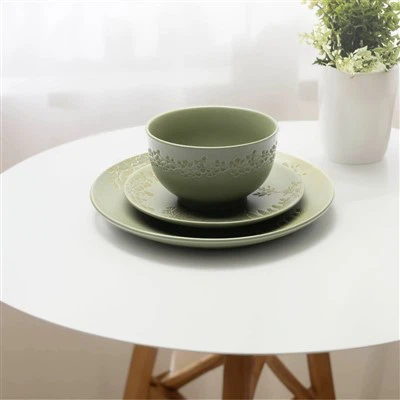
If you’re looking to restock your serveware, upgrade your dinner party set, or just grab a couple extra pieces for everyday use, feel free to reach out to our team to chat about what works for you. We can answer all your questions, help you pick the right pieces, and even share more care tips specific to the set you get. Don’t be shy—we’re here to help, not just sell you stuff.
Bowls References:
- American Ceramic Society. (2018). "Properties of Stoneware and Glazes." Journal of Ceramic Science and Technology.
- Food and Drug Administration. (2020). "Food-Safe Ceramic Ware Care and Maintenance." FDA.gov.
- The Pottery Supply Association. (2019). "Best Practices for Stoneware Serveware Care." Pottery Craft Quarterly.
Wellwares (Shijiazhuang) Limited
Wellwares (Shijiazhuang) Limited is one of the most professional serveware manufacturers and suppliers in China, featured by quality products and good service. Please rest assured to wholesale customized serveware at low price from our factory.
Address: 12F, Huahai Universal Plaza, No.199 Xinhua Road, Shijiazhuang.
E-mail: chloecui@wellwares.com
WebSite: https://www.wws-ceramic.com/
