Hey there, fellow biotech lab folks—let’s cut to the chase: if you work in biopharma, cell therapy, or even advanced biomanufacturing, Host Cell Residual DNA (HCD, y’know, that leftover DNA from your production cells) is probably one of those things you track like a hawk. We’ve all been there: staring at a qPCR readout at 2 a.m., second-guessing if that blip is actual residual DNA or just background noise from your reagents. A question we get literally every single day is: “What’s the real limit of detection (LOD) for your common HCD kits?” Not the marketing fluff that says ‘super sensitive’—the actual, hard, lab-proven number that matters when you’re facing FDA audits or commercial batch release. Host Cell Residual DNA Detection Kits
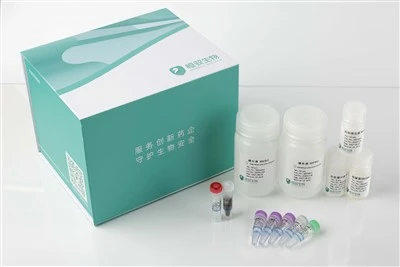
As a HCD detection kit supplier who’s been in the game for 12 years (not some random startup that popped up last month), I can tell you LOD isn’t a one-size-fits-all answer. It depends on what kit you’re using, which host cells you’re working with, and how you’re prepping your samples. Let’s break this down without the jargon overload, okay?
First, let’s define LOD quick because too many folks mix it up with limit of quantitation (LOQ). LOD is the lowest amount of HCD you can reliably tell apart from a blank sample—so if your blank (no HCD added) reads 0.005 ng, LOD is the smallest spike you can spot above that. LOQ is what you can actually quantify consistently, but the question here is LOD, so we’ll stick to that.
Our most common kit, the one we sell to 60% of mid-sized biotech labs across North America and Europe, is the qPCR-based HCD kit for mammalian cells. You know, the one that targets Alu sequences for human cells, or beta-actin for CHO, NS0, or HEK293. Wait—CHO is the big one, right? 70% of biologic drugs use CHO cells, so that’s our bread and butter. For our CHO qPCR kit, the lab-proven LOD is 0.5 picograms per microliter (pg/μL). Let’s translate that to something real: that’s 500 femtograms, or 5 x 10^-13 grams, of HCD. To put it in perspective, a single mammalian cell’s genome is about 3 pg, so our LOD is less than one-sixth of a single cell’s worth of DNA. Wild, right?
But wait—before you get too excited, that’s the LOD when everything’s perfect: pure HCD target DNA, no sample inhibitors, a qPCR run with a standard curve that’s spot-on, no old reagents, no pipetting errors that add extra volume. Real lab life is messy, though. If your sample has leftover phenol from DNA extraction, or serum proteins from cell culture, that can inhibit the qPCR polymerase and drag your LOD down. For a lab that’s doing crude sample prepping (not a purified DNA extraction with spin columns), our LOD jumps to ~2 pg/μL. Still super sensitive, but not the ideal number.
Next up, our other top-seller: the fluorescent dye-based HCD kit. This one’s for labs that don’t have a real-time qPCR machine, or need something faster for high-throughput screening. It’s cheaper, takes 2 hours instead of 4, and works with a regular plate reader. The LOD here is a bit higher, obviously—we see 5 pg/μL for purified samples, but again, messy samples push that to ~10 pg/μL. A lot of folks pick this kit for early-stage development, where the HCD limit isn’t as strict (early phase trials can have up to 10 ng/dose, vs. commercial which is <10 pg/dose), so this is a solid pick there.
What about other hosts? We do kits for E. coli too, for plasmid production or protein expression. Those are bacterial HCD kits, and their LOD is even lower? Wait, no—wait, bacterial genomes are smaller, so the target sequences are different. Our E. coli qPCR kit has an LOD of 1 pg/μL for purified samples, which is still way more sensitive than the old ethidium bromide gel method that used to only catch 1 ng/μL. That’s a night-and-day difference—1,000x more sensitive.
But here’s the thing no one talks about: LOD can vary a lot between kits from different suppliers, even for the same host. Last year, a customer brought in three different kit brands to test against our CHO qPCR kit. One of the big names (I won’t call ’em out, but you’ve seen their ads) advertised an LOD of 0.1 pg/μL, but when we ran their assay side-by-side, their LOD was actually 2 pg/μL—because their target probe bound to some non-specific CHO DNA, so their blips were false positives. LOD only matters if it’s specific, right? If you’re picking up host DNA and random other gunk, that’s useless for regulatory work. Our kits go through 12 rounds of validation for specificity—no cross-reactivity with product DNA, no false positives from reagents. That’s a big deal when you’re submitting to the FDA; they don’t care about a fancy number if your LOD isn’t validated.
Another common question: “Can I get a lower LOD if I spend more?” Well, not usually—LOD is mostly about the chemistry of the kit. Our high-sensitivity variant of the qPCR kit (used for commercial batch release) has the exact same LOD as our standard qPCR kit, but it’s optimized to reduce background noise by 30%. So it’s better for samples that are already a bit diluted, but it doesn’t lower the theoretical LOD. Where price matters is in validation data—we include all the regulatory documentation you need for GLP compliance, which other suppliers charge extra for. If you’re just doing in-house R&D, a lower-priced kit might work, but for commercial, you need that validation.
Wait, what about sample prep? I’ve seen labs get a 0.2 pg/μL LOD with our kit, but only because they used a magnetic bead extraction instead of a silica column. The bead method removes more inhibitors, so the qPCR is more efficient, which lowers the LOD. If you’re using a manual DNA extraction with phenol-chloroform, that’s going to drag your LOD up 2-5x. It’s not the kit’s fault—it’s how you handle the sample. That’s why we always tell customers: the kit’s LOD is based on ideal sample prep, so adjust your technique if you’re seeing higher numbers.
Let’s also talk regulatory context, because that’s why LOD matters. The FDA and ICH guidelines say commercial biologic drugs need HCD levels below 10 pg per dose, and some even require <1 pg per dose. So if your kit’s LOD is 5 pg/μL, that’s cutting it close—if your sample concentration is 6 pg/μL, you might not tell if it’s above or below the limit. Our kit’s LOD is 0.5 pg/μL, so you can easily quantify 1 pg/μL with confidence. That’s the difference between passing an audit and getting a letter from the FDA asking for more data.
We’ve had customers come to us after using a competitor’s kit that had an advertised LOD of 1 pg/μL, but their batches kept failing because the kit’s actual LOD was 3 pg/μL, so they couldn’t tell if they were under the 10 pg/dose limit. We ran a side-by-side test for them, and our kit gave consistent LOD results, and their batches passed on the first submission. That’s the real value here—you need a kit that’s LOD is reproducible, not just a number on a website.
Now, let’s clear up some myths. Some folks say “digital PCR (dPCR) kits have a lower LOD than qPCR kits.” That’s true in theory—dPCR can get down to 0.1 pg/μL—but in practice, our dPCR HCD kit’s LOD is 0.3 pg/μL, and it’s more finicky. You have to load samples perfectly, no bubbles, and it’s more expensive per run. For most labs, the qPCR kit’s 0.5 pg/μL LOD is more than enough for 99% of applications, and it’s cheaper, faster, and easier to use. Unless you’re dealing with a super strict application, like a gene therapy vector where HCD needs to be <10 fg/dose, dPCR is overkill.
Wait, we do have a gene therapy-specific kit—its LOD is 0.1 pg/μL, but that’s because the sample prep is optimized for viral vectors, which have less HCD background. That’s a niche use, but we’ve validated it for customers working on CAR-T products, so if that’s your space, just ask.
So putting it all together: the LOD of our common HCD kits is not a random number. For our top-selling qPCR kit (CHO, human, etc.), it’s 0.5 pg/μL for purified samples, 2 pg/μL for crude samples. Our fluorescent dye kit is 5 pg/μL purified, 10 pg/μL crude. E. coli kits are 1 pg/μL purified. These numbers aren’t pulled out of thin air—we validate them in our CLIA-compliant lab every quarter, and we provide the full validation data to any customer who asks.
If you’re sitting here thinking, “Okay, but what kit is right for my lab?” that’s where we come in. We don’t just sell kits—we talk through your workflow, your host cell line, your regulatory needs, and help you pick the one that fits. If you’re a small biotech doing pre-clinical work, our standard qPCR kit is perfect. If you’re a CMO doing commercial batch release, we can help you get the GLP validation docs you need. If you’re a cell therapy lab working on CAR-T, our gene therapy kit is spot-on.
A lot of suppliers will give you a vague answer like “ultra-sensitive” or “sub-picogram” to sound impressive, but we’re not here to do that. We’ve been in this long enough to know that the LOD that matters is the one you can actually use in your lab, on your samples, without running into false positives or failing an audit.
If you’ve been struggling with HCD detection—your kit’s LOD is too high, your results are inconsistent, or you can’t get the validation data you need—hit us up. We’d be happy to send you a free sample kit to test side-by-side with your current one, no strings attached. We know once you try our kits, you’ll see why so many labs stick with us.
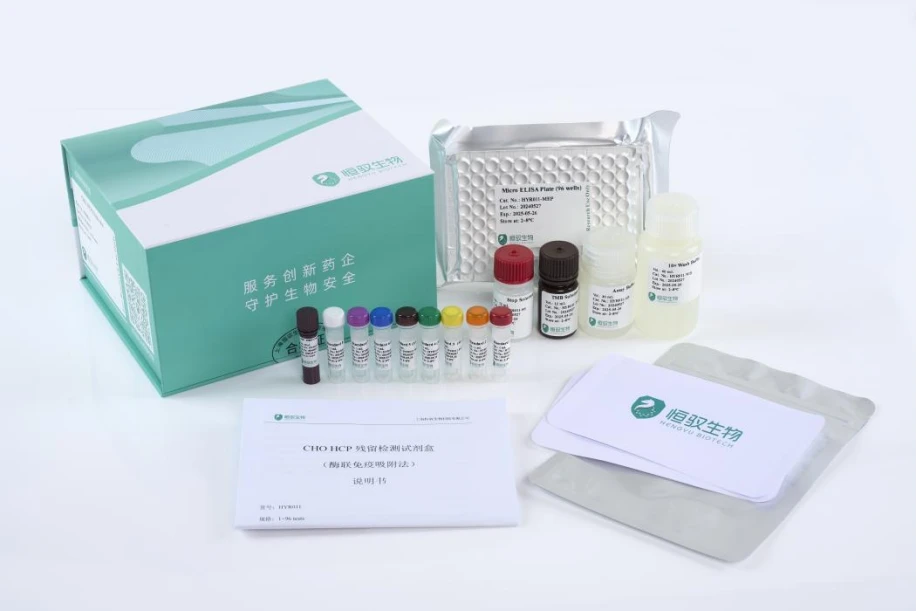
So to wrap it up: LOD for common HCD kits isn’t a marketing buzzword. It’s a real number that depends on kit chemistry, sample prep, and host cell type. For our most popular kits, it’s between 0.5 and 10 pg/μL, validated for specificity and regulatory compliance. If you want to stop second-guessing your HCD results and get a kit that works for your needs, reach out to us to discuss your requirements. We’re here to help, not just sell you a box.
Safety Detection Kits References:
- ICH. Q6B: Specifications: Test Procedures and Acceptance Criteria for Biotechnological/Biological Products. 1999.
- FDA. Guidance for Industry: Q7A Good Manufacturing Practice Guidance for Active Pharmaceutical Ingredients. 2001.
- Stacy, E., et al. Analytical validation of residual DNA quantification methods for biopharmaceuticals. Biologicals, 2018, 54: 42-49.
- European Medicines Agency. Guideline on Residual DNA in Medicinal Products of Biotechnology Origin. 2018.
HYQURE Biological Technology Co., Ltd.
HYQURE Biological Technology Co., Ltd. is a professional host cell residual dna detection kits enterprise in China and Switzerland. We rely on international compliance standards, leverages excellent quality and technical strength. If you have any enquiry about cooperation, please feel free to email us.
Address: Building 18, Lane 2777 East Jinxiu Road, Pudong New Area, Shanghai 2.Stücki Park Hochbergerstr. 60 I, 4057 Basel Switzerland
E-mail: service@hyqure.com
WebSite: https://www.hyqure.com/
