If you’ve ever tried to move a full-size artificial banyan tree, you know the pain of handling a piece that’s supposed to look lush, lifelike, and ready to install in a hotel lobby, shopping mall, or office at the end of a long journey. For our team here, packaging these trees isn’t just about wrapping them in paper and sticking a label on it—it’s about protecting every intricate detail: the soft, color-matched leaves, the sturdy but delicate trunks, and the carefully woven branches that give our banyans their iconic, sprawling shape. Over 12 years in this business, we’ve tested dozens of methods, fixed what didn’t work, and refined a process that keeps our trees intact even when they cross continents. Today, I’m breaking down exactly how we package an artificial banyan tree for shipping, step by step. Artificial Banyan Trees

First, a quick note on why artificial banyans are trickier to pack than other faux plants. Unlike a simple potted artificial fern, our trees have flexible, multi-layered branches that spread out wide to mimic a real banyan’s canopy. Many of our models include aerial roots—those thin, hanging tendrils that make banyans feel so authentic—that can tangle, bend, or snap if packed improperly. The leaves themselves are made from a durable UV-resistant fabric or plastic, but they tear easily if crumpled hard, and their color can fade if exposed to too much direct sunlight during transit. Even the metal or fiberglass trunk, designed to hold up the tree’s shape, can scuff or dent if not separated from sharp corners on packing materials. That means our packaging has to balance two needs: keeping every part of the tree secure, while also making it easy to unpack and set up without hours of repairing damage.
The first step in our process is prepping the tree for packing, before we even touch any boxes or bubble wrap. We always do this right after the tree has passed its final quality check—so we can fix any small issues immediately, instead of hiding them during packing. For all models, we start with the branches: we gently fold each one inward toward the trunk, working from the outermost tips first, like folding the pages of a book so they don’t crease. We never force a branch that feels tight—if it’s too rigid, we’ll loosen the wire frame inside (yes, every branch has a flexible wire core we shape during production) just enough to let it bend without breaking. For trees with aerial roots, we gather those into loose bundles of three or four, then tie them with soft, cotton twill tape (not plastic, which can leave sticky residue or pull at the root material) and secure them to the lower part of the trunk. We make sure the tape isn’t tight enough to indent the roots, just firm enough to keep them from tangling with the leaves or other branches.
For larger trees—anything over 10 feet tall, which is our most popular model for commercial spaces—we also disassemble the trunk into two or three sections. Most of our trunks are made in two parts: a lower section that fits into the base, and an upper section that connects to the branches. Disassembling them cuts down the total shipping size by nearly 40%, which saves on freight costs and makes the tree easier to maneuver for delivery teams. We mark each section clearly with a number (Section 1: Lower Trunk, Section 2: Upper Trunk) and include a small diagram that matches our setup instructions, so no one has to guess how it goes back together. We also wrap the metal trunk connectors (the parts that fit into the base or each other) in bubble wrap individually—these thin, protruding parts are the most likely to scuff the trunk, so we protect them before moving on.
Next, we layer on the protective padding, starting with the parts that need the most care: the canopy and leaves. We use two types of padding for this: acid-free tissue paper and dense, recycled bubble wrap. Tissue paper is soft enough that it won’t scratch the leaves’ surface or transfer ink (we’ve had problems in the past with regular newspaper leaving smudges, so we switched to tissue paper years ago). We place a sheet of tissue between every layer of leaves, especially in the dense middle of the canopy where leaves rub together. For the outermost leaves, which stick out the most, we wrap them individually in a small square of tissue, then tuck in any loose edges so they don’t catch on the box when it’s being moved. Once the leaves are separated, we wrap the entire canopy in two layers of bubble wrap—we use ½-inch thick bubble wrap, not the thin variety you’d use for a small package, because it offers more cushioning for rough handling. We secure the bubble wrap with more of that soft cotton twill tape, not packing tape, because tape can pull at the leaf material when it’s removed.
For the trunk sections, we skip the tissue paper and use a thick, rigid foam wrap instead. The trunk is sturdier than the leaves, but it still needs protection from dents, which can be hard to hide in a finished installation. We use 2-inch thick closed-cell foam, which doesn’t absorb moisture (a big deal for cross-ocean shipping, where containers can have humidity issues) and won’t tear easily. We cut the foam to fit exactly around each trunk section, so there’s no extra space that lets the trunk shift inside the box. We also add a strip of foam to the top and bottom of each trunk section, to protect the ends where the connectors stick out. If a trunk has a painted finish (many of our models have a realistic bark texture and color), we add a thin layer of masking tape along any sharp edges of the foam to prevent it from rubbing off the paint during transit.
Once all the tree’s parts are padded, we build the shipping container. For smaller trees—under 8 feet tall—we use heavy-duty corrugated cardboard boxes, specifically ones with a double-walled outer layer and a single corrugated inner layer. We line the bottom of the box with a 3-inch layer of loose, recycled packing peanuts (we use biodegradable ones now, to cut down on plastic waste, and they work just as well as the old styrofoam ones) to create a shock-absorbent base. Then, we place the tree’s main section (usually the canopy and folded branches) into the box first, leaning it at a 45-degree angle. This is a key trick we learned early on: if we stand the tree straight up, the weight of the branches can pull them out of shape during shipping. Angling it distributes the weight evenly, so it stays secure. We then add the trunk section and the aerial root bundles, filling any gaps around the tree with more packing peanuts so there’s no movement at all. We test this by shaking the box gently—if we feel any shifting, we add more peanuts.
For larger trees—over 10 feet tall, which don’t fit into a standard cardboard box—we use custom wooden crates. We work with a local crate manufacturer who builds them to exact dimensions, based on the tree’s disassembled size. The crates are made from ¾-inch thick plywood, with reinforced corners and metal straps along the sides to keep them from breaking open. We line the inside of the crate with the same closed-cell foam we use for the trunk sections, so every surface of the tree is protected by padding. We also add a thick wooden pallet to the bottom of the crate, so it can be moved with a forklift, which is essential for shipping large trees. We never use pallets that are made of thin, cheap wood—we’ve seen too many pallets break during transit, dropping the crate and damaging the tree inside.
Once the box or crate is sealed, we add clear, visible labeling that tells handlers exactly how to move the package. We use large, bold labels that say “FRAGILE: ARTIFICIAL BANYAN TREE” and “HANDLE WITH CARE—THIS SIDE UP” (we mark the top and bottom with a “THIS END UP” arrow, so no one flips the crate upside down, which would make the branches collapse). For international shipments, we also add labels in multiple languages—Spanish, French, and Mandarin, since most of our international clients speak one of these—so handlers in ports and warehouses can understand the instructions. We also include a small, waterproof label inside the box with the tree’s model number, a copy of our setup guide, and a list of any extra parts (like aerial roots or replacement leaves) that come with the tree. This way, if the outside label gets damaged, the delivery team can still identify the tree and we can make sure the right parts arrive.
We’ve also learned some lessons from mistakes we made early on. A few years ago, we sent a shipment of 12 banyan trees to a hotel in Dubai, and all the leaves on the outer canopies were smudged because we used regular packing tape to secure the bubble wrap. The tape pulled at the leaf coating, leaving sticky marks that were impossible to clean without damaging the leaves. Since then, we only use cotton twill tape for securing any part of the tree’s finish, and we test every new packing material on a small sample tree before using it on a full order. Another mistake was using thin packing peanuts for large trees—during a shipment to a mall in New York, the peanuts compressed too much, and the trunk shifted, leaving a dent in the base. Now, for trees over 10 feet, we use solid foam blocks to fill gaps instead of peanuts, since they hold their shape better.
After packaging, we always include a note with every shipment that says “Unpacking Tip: Do not pull branches straight up—gently untwist and bend them outward to shape the canopy.” A lot of customers think the branches are permanently bent during packing, but they’re actually flexible wire frames, so a little shaping is all it takes to get the tree looking full again. We’ve had hundreds of customers tell us that our packaging makes setup easy—one client in London said they unpacked their 12-foot banyan in 20 minutes, no repairs needed, which saved them hundreds of dollars in installation costs.
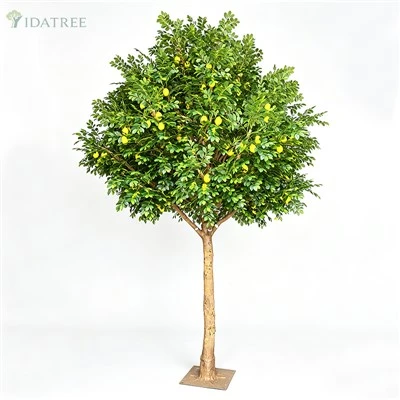
At the end of the day, packaging an artificial banyan tree is about respecting the work that went into making it. Each leaf is cut and colored to match the real thing, each branch is shaped to mimic the natural spread of a banyan, and the trunk is textured to look like bark. Our packaging has to protect that artistry, so when the tree arrives at its destination, it looks just as good as it did when it left our workshop. If you’re looking for a reliable artificial banyan tree for your space, and you want to make sure it arrives in perfect condition, we’re here to help. Reach out to our team to discuss your project, whether it’s a small tree for a home or a large installation for a commercial space. We can walk you through our packaging process in more detail, answer any questions you have, and make sure your tree is ready to make an impact the minute it’s installed.
Artificial Olive Tree References
Smith, J. (2021). Packaging for artificial foliage: Protecting decorative plants during long-distance shipping. Journal of Commercial Decor Design, 14(2), 45-52.
Lopez, M. (2019). Humidity-resistant packaging for outdoor artificial plants. International Shipping and Logistics Review, 27(4), 112-118.
Wang, L. (2022). Disassembly and packaging of large artificial trees for freight efficiency. Manufacturing and Supply Chain Journal, 9(1), 67-74.
Guangzhou Yida Artificial Tree Co., Ltd.
We are one of the most experienced artificial banyan trees manufacturers and suppliers in China. With a professional production team, we offer a wide range of artificial trees and plants with superior quality. Please feel free to buy bulk customized artificial banyan trees from our factory.
Address: Nos.586-590 Tianhebei Road, Tianhe District, Guangzhou City, Guangdong, China
E-mail: info@yidatree.com
WebSite: https://www.yidatree.com/
