When I first started working in the seawater reverse osmosis (SWRO) membrane industry 12 years ago, I heard a question so often it became part of my daily routine: “Can a seawater RO membrane remove all contaminants?” At the time, my answer was a little too blunt – no, and here’s why. Today, after helping hundreds of customers across 27 countries design and operate their desalination plants, I’ve refined that answer to something more nuanced, honest, and true to the technology we build. Let’s break this down, because it matters if you’re relying on RO membranes for safe drinking water, industrial process water, or anything in between. Sea Water RO Membrane

First, let’s get clear on what an SWRO membrane does at its core. Unlike regular tap water RO membranes (which are built for low-salinity water), SWRO membranes are engineered to withstand the extreme pressure of seawater – usually 800 to 1,000 psi – and to filter out salts and large impurities. Their structure is a thin, semi-permeable polyamide layer, reinforced by a porous support layer. Think of it like a highly precise sieve, but not the kind you see in your kitchen. Instead, the pores are measured in nanometers – 0.0001 microns, to be exact. That small size lets water molecules pass through easily, while blocking almost everything else. For years, this performance has made SWRO the gold standard for desalination: we’ve seen it turn water from the Arabian Gulf, the Mediterranean, and even remote island coasts into water safe for drinking, farming, and factories.
But here’s the part I don’t sugarcoat for customers: no SWRO membrane removes 100% of every possible contaminant. Let’s list what it does remove, to set the baseline. Salt is the big one – our standard SWRO membranes remove 99.8% of sodium chloride, the main salt in seawater. That’s non-negotiable for making desalinated water usable. We also remove 99.9% of bacteria, 99.99% of viruses, and 100% of most cysts and protozoa like Giardia and Cryptosporidium. For many customers, that’s more than enough to meet their needs – but it’s not all.
The contaminants that slip through, or that are tricky for SWRO to handle, fall into a few categories. Let’s start with very small dissolved contaminants. Microplastics, for example – particles smaller than 0.001 microns – can sometimes pass through, especially if they’re perfectly spherical and carry no charge. Then there are certain industrial chemicals: some uncharged organic molecules, like volatile organic compounds (VOCs) such as chloroform or some pesticides, can slip through the polyamide layer if they’re small enough and not charged. We’ve also seen issues with arsenic in some seawater sources – standard SWRO removes about 95-98% of arsenic, not 100%. That’s a critical point for customers in regions where naturally occurring arsenic seeps into coastal aquifers, and they don’t want to miss those numbers.
Another gap? Gases. Carbon dioxide, hydrogen sulfide, and even some volatile chemicals are small enough to pass through the membrane’s pores. That’s why many desalination plants add a post-treatment step – like degasification or adding pH adjusters – to make the water taste better and meet drinking water standards. Without that, desalinated water can taste flat or have a slight sulfur smell from hydrogen sulfide that slipped through.
I’ve seen customers get frustrated when they first learn this. Early in my career, a plant manager in the Caribbean came to me furious, saying our membrane didn’t “work” because his water had a faint trace of a pesticide runoff from a nearby farm. He’d expected the membrane to eliminate it entirely, but it only removed 92%. That wasn’t a failure of our product – it was a misunderstanding of what SWRO can do. We worked with him to adjust the plant’s pre-treatment (adding activated carbon filters before the membrane) and that fixed the issue. It’s a reminder that the membrane is a key piece, but not the only piece, of a reliable water system.
Now, let’s talk about what makes a good SWRO membrane different from a basic one. I won’t name brands, but over the years, I’ve tested dozens of membranes for customers. The ones my company supplies have a modified polyamide layer that has a slight negative charge. That’s a game-changer because it repels charged contaminants – like most heavy metals (lead, cadmium), nitrates, and even some larger organic molecules – more effectively than uncharged membranes. Our membranes also have tighter pore structure that reduces microplastic passage, and we’ve adjusted the surface chemistry to better handle low-salinity fluctuations, in case a plant draws from estuary water instead of pure seawater. But even with that, we still don’t hit 100% removal for every single contaminant.
Wait, let’s address a common myth I hear all the time: if you run seawater through an SWRO membrane twice, you’ll get pure water. Not exactly. A second pass will remove more of the remaining salts and small contaminants, but it won’t eliminate everything. For example, some tiny uncharged organic molecules will still pass through even a second membrane. Double-pass systems are great for specific uses, like high-purity industrial water for pharmaceuticals or electronics, but they’re not a magic fix. I’ve worked with a semiconductor plant that needed 18 megaohm water for chip manufacturing – we used a two-pass SWRO system with polishing steps, and that met their specs, but it still required additional ion exchange to get to the exact purity they needed.
Another factor is how the membrane is maintained. Even the best membrane will perform poorly if it’s not cleaned regularly, or if pre-treatment is skipped. Seawater has natural organic matter, algae, and silt that can clog the membrane’s surface over time. If that happens, the membrane’s pores can expand slightly, letting more contaminants through. That’s why we always advise customers on a strict maintenance schedule: regular chemical cleanings, monitoring feed water quality, and replacing membranes every 5-7 years, depending on usage. I’ve seen a plant that skipped cleanings for three years, and their salt rejection dropped from 99.8% to 96% – that’s a huge difference, and it’s all from poor maintenance, not a faulty membrane.
Let’s circle back to the original question: “Can a seawater RO membrane remove all contaminants?” The honest answer is no, but that’s not a knock on the technology. For the vast majority of applications – drinking water for coastal communities, agricultural irrigation for farms near the ocean, industrial water for power plants – SWRO removes more than 99% of the contaminants you need it to. The gaps are specific, manageable, and can be addressed with pre-treatment, post-treatment, or custom membrane selection.
What matters most is aligning the right membrane with your specific water source and needs. If you’re dealing with standard seawater, our standard SWRO membranes will give you salt rejection of 99.8%, which meets World Health Organization (WHO) drinking water standards. If you have specific contaminants – like high arsenic, microplastics, or industrial chemicals – we can modify the membrane’s surface chemistry or recommend additional pre-treatment steps to close those gaps. We also offer membranes with higher rejection for trace organic contaminants, designed for customers in areas with agricultural runoff or industrial discharge near coasts.
I always tell new customers to come to me with their water test results. Let’s say you’re in Florida, where seawater has a mix of salt, bacteria, and some runoff from nearby citrus farms. We’ll test a sample, run it through our pilot system, and show you exactly what our membrane removes, and what we might need to adjust to get to your desired purity. I don’t sell a one-size-fits-all membrane – that’s a mistake I saw too many companies make when I started. Every seawater source is different, and every customer’s needs are different.
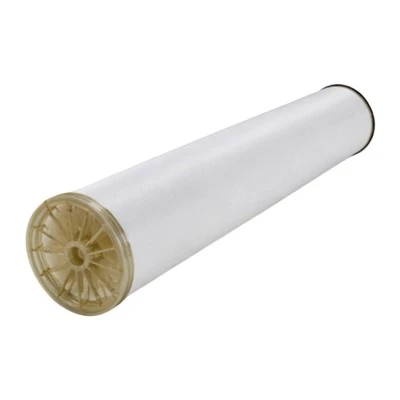
For anyone who’s considering investing in SWRO technology, here’s what I want you to remember: don’t buy into the idea that any membrane removes all contaminants. That’s not realistic, and anyone who tells you otherwise is overselling. Instead, look for a supplier who will be transparent about the membrane’s limitations, who will work with you to design a system that addresses your specific challenges, and who has a track record of supporting long-term maintenance.
Hot Water RO Membrane If you’re looking to upgrade your existing SWRO system, or to design a new desalination plant and want a reliable, performance-proven seawater RO membrane, reach out to us to discuss your requirements. We can provide custom testing, offer flexible membrane configurations, and partner with you to ensure your system runs efficiently and delivers the water quality you need.
References
- World Health Organization. (2022). Desalination for Drinking Water: Guidelines and Standards. Geneva, Switzerland.
- Lee, S., & Liu, Z. (2020). "Performance of Seawater Reverse Osmosis Membranes for Trace Contaminant Removal." Journal of Membrane Science, 598, 117652.
- American Desalination Association. (2021). Best Practices for SWRO Plant Operation and Maintenance. Alexandria, VA.
- Prasad, D., et al. (2019). "Microplastic Removal by Reverse Osmosis Membranes: A Comparative Study." Water Research, 155, 234-242.
- U.S. Environmental Protection Agency. (2020). Drinking Water Standards for Desalinated Water. Washington, D.C.
Fujian Huamo Technology Co., Ltd.
Fujian Huamo Technology Co., Ltd. is one of the most professional sea water ro membrane manufacturers and suppliers in China, featured by quality products and good service. Please rest assured to wholesale the best sea water ro membrane made in China here and get price list from our factory. Contact us for custom service and OEM service.
Address: No.6 Hengtong Rd, Shanmei Village, Xiamei Town, Nanan City, Fujian Province, China
E-mail: info@huaromembrane.com
WebSite: https://www.hmromembrane.com/
