If you’ve ever stepped into a stone fabrication shop or visited a natural stone countertop showroom, you’ve probably seen large, heavy machines humming away, slicing through granite, marble, or quartzite like it’s nothing. But when I’m talking to new customers, especially small fabricators just starting out, one of the first questions I get is: “What’s the real difference between a manual stone saw and a slab saw?” For years, I’ve supplied both types of equipment from my workshop, so I’ve seen firsthand how choosing the right one can make or break a business’s workflow, costs, and finished product. Let’s break this down—no jargon, just the practical, on-the-ground differences that matter most to people turning raw stone into something beautiful. Manual Stone Slab Saws

First, let’s start with the basics, because a lot of people mix these two up based on size alone. Manual stone saws, which are what I specialize in, are designed as portable or semi-stationary tools for cutting stone, but here’s the key: they’re operated by a person, not automated, and they’re built for smaller, more precise cuts or for handling stone that doesn’t fit on a large slab saw. I remember when I first started supplying these machines, a fabricator from upstate New York came to me saying he’d tried a slab saw for trimming 2-foot wide granite tiles, and it was like using a semi-truck to park a scooter. That’s the kind of misstep I see often. Slab saws, by contrast, are large, heavy, stationary machines built explicitly to handle full stone slabs—those 5-foot to 10-foot wide, 2-centimeter to 3-centimeter thick sheets of stone you see in showrooms. They’re built for high-volume, straight cuts, not the kind of detailed work a manual saw excels at.
Let’s dive deeper into operational design, because that’s where the biggest practical differences live. A manual stone saw, at its core, is a compact cutting unit. Most models I supply have a blade range of 12 inches to 20 inches, which means they can cut up to 10 inches to 16 inches deep—enough for countertop slabs, tile, or custom cutouts like sink basins. The user feeds the stone into the blade, or guides the blade along a marked line on the stone, with the only power coming from the saw’s motor. There’s no automatic feed, no computerized positioning; it’s all based on the operator’s skill. I’ve had customers tell me that this is the biggest advantage for small shops: you don’t need a dedicated technician to run it. A single worker can pick it up, adjust the blade height, and start cutting within minutes. What’s more, many of the manual saws I sell are portable—you can move them around a job site, or even load them into a truck to work on location, which is impossible with a slab saw.
Slab saws, on the other hand, are fixed structures. Their blade is usually 36 inches to 60 inches wide, so they can cut through a full 3-centimeter stone slab in one pass, no need to flip or reposition the stone. They have automatic feed systems that pull the slab through the blade at a set speed, so you can cut dozens of identical countertop slabs in an hour. But here’s the catch: they’re not portable at all. Most weigh between 5,000 and 20,000 pounds, so you can’t move them to a job site. They also take up a huge amount of space—you need a workshop with high ceilings, a reinforced floor, and enough room to maneuver full slabs, which is a big investment for a small business. I worked with a fabricator last year who tried to rent a slab saw for a residential job, and he ended up spending more on delivery and setup than he would have on a manual saw that could have done the entire job on-site.
Next, let’s talk about precision and flexibility, because that’s where a lot of new fabricators get surprised. Manual stone saws are made for detailed work. Because you’re guiding the blade by hand, you can make curve cuts, odd-shaped cutouts, or small adjustments that a slab saw can’t handle. For example, if you’re cutting a custom countertop with a curved edge to fit an old, irregular kitchen space, a manual saw lets you follow that curve exactly. You can also cut smaller pieces—like 12-inch tile or thin backsplash panels—without wasting a full slab. I often have customers who work with natural stone that’s not a standard size, like leftover slabs from a large commercial project. A manual saw lets them cut those leftovers into usable pieces for residential jobs, which saves them money and reduces waste.
Slab saws, by contrast, are built for straight, uniform cuts. Their automatic systems are great for large batches of identical pieces, but they can’t handle curves, small cutouts, or non-standard shapes. If you try to cut a curve on a slab saw, you’ll have to use a router or other tool to finish the edge, which adds time and cost. I’ve seen fabricators try to force a slab saw to do detailed work, and it almost always results in uneven edges or wasted stone. The precision of a slab saw is great for what it does, but it’s not flexible. That’s why my customers who do a mix of custom residential jobs and large commercial projects will often have both: a slab saw for bulk cutting full slabs, and a manual saw for the detailed, on-site work.
Cost is another huge difference, and it’s not just the purchase price. When I supply manual stone saws, they’re priced for small to medium businesses. A good quality manual stone saw usually costs between $1,500 and $5,000, which is accessible for someone starting out or a shop that doesn’t have the space or budget for a slab saw. Slab saws, on the other hand, start at around $30,000 and can go up to $100,000 or more for high-capacity models. That’s a big difference, and it’s not just the upfront cost. Manual saws have lower operating costs too: they use less power, require less maintenance, and don’t need special installation or a dedicated operator. Slab saws require a dedicated technician, regular blade replacement (since they’re used so heavily), and even specialized flooring to support their weight. For a small shop that only does a few jobs a month, the cost of a slab saw just doesn’t make sense. I had a customer in Florida a few years ago who opened a small stone shop with a single manual saw. After two years, he expanded to doing 10 jobs a month, and that’s when he decided to add a slab saw—because the volume made the investment worth it, not before.
Durability and maintenance are also worth noting, even for a vendor like me who sells both types of equipment. Manual stone saws, because they’re compact and often portable, are built to be sturdy but not overbuilt. Most models have a steel frame and a water cooling system to keep the blade from overheating, and they’re designed to handle daily use without too much hassle. I usually tell my customers that a manual saw needs a blade change every 100 to 200 hours of use, and a quick tune-up once a year. Slab saws, by contrast, are heavy-duty machines built for 24/7 use. They have reinforced frames, larger motors, and specialized components for handling full slabs. But because they’re used so much, they require more frequent maintenance: blade changes every 20 to 50 hours, regular lubrication of the feed system, and occasional repairs to the automatic controls. That means higher long-term costs, even if the upfront cost is high.
Wait, but what about when to use which? That’s the question I get most, so let’s make it practical. If you’re a small fabricator just starting out, or a contractor who does occasional stone work, a manual stone saw is the way to go. It’s affordable, portable, and flexible enough to handle most jobs: cutting countertop slabs, trimming tile, making sink cutouts, and even doing on-site repairs. If you’re a mid-sized shop doing 10 or more jobs a month, and you’re cutting full slabs on a regular basis, a slab saw can boost your productivity, but you’ll still want a manual saw for the detailed work. If you’re a large commercial operation cutting hundreds of slabs a month, a slab saw is essential, but even then, many shops keep a few manual saws on hand for odd jobs or on-site adjustments.
I’ve seen too many people make the mistake of thinking “bigger is better” when it comes to stone cutting equipment. A couple of months ago, a fabricator came to me who had bought a used slab saw for his small shop, and he was struggling to use it. He was only doing 3 or 4 jobs a month, and the slab saw was too big for his workshop, too expensive to operate, and he couldn’t use it for the curved edges and custom cutouts his customers wanted. He ended up selling the slab saw and buying a manual stone saw from me, and within six months, his profit margins went up because he wasn’t wasting money on the slab saw he didn’t need. That’s the kind of story that drives why I supply manual saws—I want to help people pick the right tool for their business, not the biggest one.
Another common misconception: manual stone saws are less powerful than slab saws. That’s not true. Most manual saws have 1.5 to 5 horsepower motors, which is enough to cut through granite, marble, and quartzite. The difference is in how you use the power. A manual saw gives you full control over the cut, while a slab saw uses a larger motor to pull the slab through at a set speed. For most residential jobs, that power difference doesn’t matter at all. I’ve had customers cut 3-centimeter granite with their manual saws for years, no problem. The only time power becomes an issue is when you’re cutting very thick stone (over 16 inches) or doing large-volume cuts, which is when a slab saw makes sense.
Portability is also a game-changer for manual stone saws. A lot of my customers are contractors who work on both residential and commercial jobs, and they need to take their equipment to the site. A slab saw can’t be moved, so you have to cut all the stone in your workshop, which means you have to transport heavy slabs to the job site. A manual saw lets you cut the stone on-site, which reduces the risk of damaging the slab during transport, and it lets you make adjustments on the fly if the space isn’t exactly what you planned. I had a job last year where a kitchen island didn’t have a straight edge because of an old floor, and the customer wanted a custom curve. We brought the manual saw to the job site, cut the curve in an hour, and saved the customer from having to rework the entire installation. That’s something a slab saw could never do.
Waste reduction is another big benefit of manual stone saws. Because you can cut small pieces from leftover slabs, you don’t have to throw away as much material. Natural stone is expensive, and many fabricators struggle with waste, especially when they’re working with unique, rare slabs. A manual saw lets you repurpose those leftovers into smaller pieces for tile, backsplashes, or custom accents, which adds extra revenue to your business. Slab saws are great for cutting full slabs, but they’re not as good for trimming small pieces, so you end up wasting more material.
Let’s wrap this up with what matters most when you’re choosing between the two. If you’re just starting out, or you need flexibility, portability, and lower costs, a manual stone saw is the right choice. If you’re doing high-volume, straight cuts on full slabs, and you have the space and budget for a slab saw, that’s the right fit. At the end of the day, it’s not about which tool is better—it’s about which tool fits your needs.
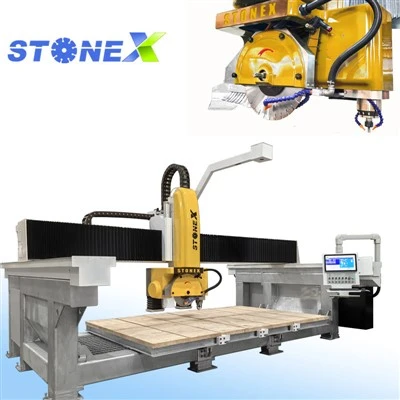
That’s why I’ve spent years supplying manual stone saws: I’ve seen how the right tool can make a small business thrive, and the wrong tool can sink it. If you’re in the market for a manual stone slab saw, or you have questions about which equipment works best for your jobs, don’t hesitate to reach out to me to discuss your requirements. Together, we can find the right tool to help you get the job done efficiently, affordably, and with the precision your customers expect.
Wire Saw Machine References
- Stone Fabricators Alliance. (2022). "The Complete Guide to Stone Cutting Equipment for Small Businesses." North American Stone Fabrication Association.
- National Tile Contractors Association. (2021). "Portable vs. Stationary Stone Cutting Tools: Operational and Cost Comparisons." NTCA Technical Report Series.
- Natural Stone Council. (2023). "Waste Reduction Strategies for Natural Stone Fabrication Shops." Sustainable Stone Practices Program.
- Machinery Management International. (2022). "Equipment Acquisition Guide for Small Stone Fabrication Businesses." Global Construction Equipment Review.
Fujian Jingyang Intelligent Equipment Manufacturing Co., Ltd.
We are one of the most professional manual stone slab saws manufacturers and suppliers in China, also support customized service. As we have world-leading production equipment and strong manufacturing capabilities, we warmly welcome you to buy advanced manual stone slab saws at competitive price from our factory. If you have any enquiry about quotation, please feel free to email us.
Address: No. 299 Meixue West Road, Huangshi Town, Licheng District, Putian City, Fujian Province, China
E-mail: sales@stonexmachinery.com
WebSite: https://www.stonexmachine.com/
