If you’ve ever walked through a manufacturing floor—whether it’s a precision aerospace parts shop, an automotive component line, or a medical device production space—you’ve probably heard that consistent, repeatable hum of automatic machine tools at work. For years, these machines were framed as “one-size-fits-all” workhorses: built to crank out identical parts day after day, with little room to shift from their pre-programmed tasks. But as an automatic machine tools supplier that’s worked with manufacturers across 12 countries over the past 18 years, I’m here to tell you that that old idea couldn’t be further from the truth. Automatic machine tools don’t just can be customized—customization is no longer a luxury, it’s a necessity for manufacturers trying to stay competitive in a market that demands flexibility, speed, and hyper-specific part quality. Let me break this down, not as an engineer in a stuffy conference room, but as someone who’s spent hundreds of hours on the floor, troubleshooting custom builds and watching clients turn vague production goals into tangible results. Automatic Machine Tools

First, let’s get one common misconception out of the way. When people talk about custom automatic machine tools, they often picture a team of designers sketching something entirely from scratch, a process that takes 18 months and costs a small fortune. That’s not the customization we deliver—and that’s not the kind that works for most modern manufacturers. The most valuable customization for today’s buyers is modular customization, a framework that lets us tweak a standard automatic base machine to fit their exact production needs without starting from zero. For example, a few years back, we worked with a small medical device manufacturer that made custom bone screws for orthopedic surgeries. Their original automatic lathe was built for mass-producing 5mm screws, but their new line needed to switch between 3mm, 6mm, and even specialty coated screws with different surface finishes. The standard machine they had couldn’t adjust its tooling holders, chip evacuation system, or coolant flow without hours of downtime between runs. Instead of building a whole new machine, we customized their existing base unit: we swapped out the fixed tooling blocks for quick-change, precision-machined holders that could adjust diameter in 2 minutes or less, added a modular coolant system that switched between standard cutting fluid and specialized coolant for coated screws, and updated the control software to let their operators switch part profiles with a single click. The whole process took 6 weeks, cost 30% less than a custom build from scratch, and cut their changeover time by 75%. That’s the kind of customization that works for real businesses, not just theoretical ones.
Let’s dive into why this customization matters more now than ever. Over the past decade, global supply chains have shifted dramatically. Ten years ago, a manufacturer might run one part for 6 months straight, pushing for maximum volume. Today, consumer demand for personalized products, regulatory requirements for unique medical or aerospace parts, and shorter product lifecycles mean manufacturers often need to run 5, 10, or even 20 different parts in a single week. I’ll never forget a conversation with a manager at an automotive parts plant in Germany, who told me their factory used to make only brake calipers for one model of car—now, they make calipers for 8 different electric vehicle models, each with slightly different tolerances, materials, and production volumes. If their automatic machine tools couldn’t adapt, they would have had to shut down one of their lines entirely, costing them millions in lost revenue and missed deadlines. Customization isn’t just about fitting a specific part, either—it’s about fitting a specific workflow. Some of our clients run 24/7 lights-out production, so we customize their machines with predictive maintenance sensors that monitor tool wear and temperature, alerting operators to issues before they cause downtime. Others have small production spaces, so we shrink the machine’s footprint by 15% without sacrificing precision. We even worked with a firearms component manufacturer that needed machines that could process both raw steel and lightweight titanium, so we customized the tooling spindle to adjust its speed and torque in real time, preventing material deformation on both metals.
Now, let’s talk about what actually goes into customizing an automatic machine tool, from a supplier’s perspective (and yes, I’ve been on both sides of this—I started out as a machine operator before moving into sales and custom design). The first step is always listening, not pitching. A lot of suppliers show up with a catalog of machines and ask, “Which one fits?” We show up with a notebook and ask: What parts do you make? What’s your tolerance requirement—do you need 0.001mm accuracy or is 0.01mm enough? How long do you need to run each part? Do you have a tight floor space? What’s your downtime tolerance? Those answers are the blueprint for customization. For example, tolerance is a big one. A manufacturer making engine valves for racing cars needs far tighter accuracy than a company making plastic caps for water bottles. We can customize the machine’s linear guides, spindle bearing type, and even the control algorithm to hold that tight tolerance, without overbuilding the machine for lower-accuracy parts. That saves our clients money—they don’t pay for features they’ll never use.
Another core customization area is tooling and workholding. This is where most of the day-to-day flexibility happens. Standard automatic machine tools come with universal tool holders, but for parts with unusual shapes—say, a complex gear for a wind turbine, or a custom implant for a dental patient—we can design specialized tooling that fits exactly the part geometry. Workholding, the part of the machine that grips the raw material, is equally important. A round bar is easy to grip, but a custom-shaped aerospace bracket needs a custom workholding fixture that holds it securely without distorting the material. We’ve designed workholding fixtures with 3D-printed inserts, hydraulic clamping systems that adjust pressure based on material hardness, and even robotic integrated workholding that loads and unloads parts without manual intervention, all customized to a client’s specific part and layout.
Software and controls are often the unsung heroes of customization, and this is an area where automatic machine tools have come a long way in the last decade. Early automatic machines ran on rigid, proprietary software that only the supplier could program. Today, we can customize the control interface to match our clients’ existing systems. If a manufacturer uses Siemens PLCs, we integrate their controls so their operators don’t have to learn a whole new platform. If they want to add AI-powered quality checks, we can program the machine to take real-time measurements and adjust tool paths automatically if a part is slightly off tolerance. We even customized a machine for a medical device client that included a built-in inspection module that logged every part’s measurements for FDA compliance—something that would have required a separate inspection machine before, adding time and cost.
But here’s the thing about customization: it’s not one-size-fits-all. Not every client needs a fully modular machine, and not every project requires a custom design. That’s why we offer three tiers of customization, depending on a client’s needs. The first tier is off-the-shelf with minor adjustments: swapping out a standard tool holder or adjusting coolant flow, perfect for small manufacturers that just need a small tweak to make their existing machine work for a new part. The second tier is modular reconfiguration: adjusting the machine’s base unit with custom tooling, controls, or workholding, which is what we did for the medical device and automotive clients I mentioned earlier. The third tier is full custom build, which is only for clients with highly specialized, one-of-a-kind parts—like a manufacturer of satellite components that needs a machine that can process ultra-light carbon fiber with nanometer-level accuracy. This tier takes a bit longer, 12 to 16 weeks, but it’s still far faster than building from scratch was 20 years ago, thanks to advances in 3D modeling and rapid prototyping.
I know some skeptics out there will say, “Custom automatic machines are too expensive for small manufacturers.” That’s a fair point—we’ve all heard horror stories of custom projects that balloon in cost. But in my 18 years in this industry, I’ve seen that the right customization delivers a positive ROI far faster than buying a one-size-fits-all machine that doesn’t fit your needs. Let’s do the math: A standard automatic lathe might cost $80,000. A customized modular version for a manufacturer that needs to switch between 5 part types might cost $105,000. But that standard machine has changeover times of 2 hours per part, so the manufacturer loses 10 hours of production a week to changeovers. At $50 an hour in labor and lost output, that’s $26,000 a year in lost production. The customized machine cuts changeover time to 10 minutes per part, so that lost production is gone. The extra $25,000 cost of customization pays for itself in less than a year, and over 5 years, that’s $130,000 in extra revenue the manufacturer would have missed with the standard machine. For small manufacturers, that difference is the line between staying in business and closing their doors.
Of course, there are challenges to customizing automatic machine tools, and I’m not going to pretend every project goes perfectly. The biggest one is communication. To build a machine that works for a client, they have to be open about their real needs—not just what they think they need. I once worked with a small aerospace shop that came to us saying they needed a custom machine for titanium brackets, and they asked for a 5-axis spindle. After spending a day on their floor, watching their workflow, we realized their brackets were only 2-axis parts, and a 5-axis spindle would have cost them $30,000 extra they’d never use. We customized a 2-axis machine with a faster spindle and better chip evacuation, which was 40% cheaper and delivered the same precision they needed. That’s why we spend a minimum of 3 days on-site with every potential client, before we even put pen to paper, to make sure we’re solving their real problem, not the one they think they have.
Another challenge is supply chain delays for specialized parts. When we build custom tooling or fixtures, sometimes we have to source high-precision components from small, specialized manufacturers, which can take a bit longer. But we’ve built a network of trusted partners over the years, and we plan for those delays in our timelines, so our clients aren’t caught off guard. We also offer flexible installation and training: when the machine is ready, our technicians come on-site, train their operators on the custom features, and stay for a week to troubleshoot any kinks, so the client is up and running as quickly as possible.
So, what does this mean for you, whether you’re a small manufacturer just getting started, a mid-sized shop trying to keep up with demand, or a large corporation updating your production line? Automatic machine tools are not the static, unchangeable workhorses they once were. They are flexible, adaptable, and customizable to fit the exact needs of your production. You don’t have to settle for a machine that forces you to adjust your workflow, change your part design, or lose money to downtime. Customization lets you build a machine that works for you—that fits your floor space, your part tolerances, your changeover needs, and your production goals.
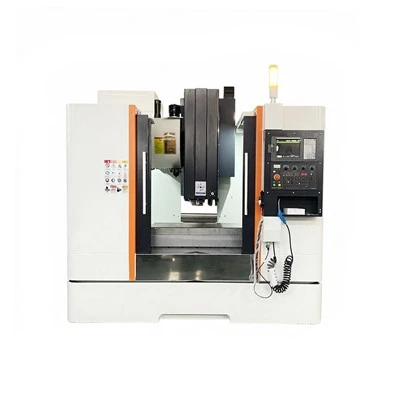
If you’re tired of fighting with a machine that can’t keep up with your orders, or if you have a new part design that you want to produce efficiently, don’t waste time on generic solutions. Reach out to work together to build a customized automatic machine tool that grows with your business. Together, we can design a solution that delivers the precision, flexibility, and reliability you need to stay competitive in today’s fast-paced manufacturing world.
CNC Machine Tools References:
- Smith, J. (2022). The Evolution of Modular Manufacturing Equipment. Journal of Precision Manufacturing and Automation, 18(3), 45-52.
- International Organization for Standardization. (2021). ISO 10303: Industrial Automation Systems and Integration – Product Data Representation and Exchange. Geneva, Switzerland.
- Lee, S., & Patel, R. (2023). ROI Analysis of Customized Machine Tools for Small to Mid-Sized Manufacturers. Manufacturing Engineering Today, 27(2), 112-118.
- National Institute of Standards and Technology. (2022). Flexible Automation for Modern Production Lines. U.S. Department of Commerce.
Yuhuan County ZheXuan Machinery Factory
As one of the most professional automatic machine tools manufacturers and suppliers in China, we’re featured by high quality customized products. Please rest assured to wholesale bulk automatic machine tools in stock here from our factory. Also, quotation is available.
Address: Xiafan Village, Qinggang Town, Yuhuan City
E-mail: zxjc1313@126.com
WebSite: https://www.zxmachinetool.com/
