Hey everyone,
I’m Jake, and I’ve been working as a Chip LED supplier for almost 8 years now. So when folks slide into my DMs or flag me down at trade shows asking, “Are these Chip LEDs actually worth the hype when it comes to energy efficiency?” I get it—there’s a lot of noise out there about lighting tech, and half the time, it’s hard to tell what’s just marketing and what’s actually backed by real data. Let’s break this down straight, no fancy jargon, just the stuff I see on the factory floor and the numbers our clients send back after testing our products. Chip LED

First off, let’s get what Chip LEDs even are out of the way. If you’re not deep in lighting manufacturing, you might know them as the tiny little diodes mounted on a printed circuit board (PCB) instead of being packaged like your old through-hole LEDs. That small, compact design is the first clue to their efficiency, but it’s not just size—there’s a reason we’ve moved away from incandescents, CFLs, and even old bare LEDs over the last decade.
Let’s start with the basics: energy efficiency for lighting boils down to how much light you get per unit of electricity you use. The official term is luminous efficacy, measured in lumens per watt (lm/W). Incandescents top out at like 16 lm/W, max. CFLs hit around 60 lm/W, which was a big step, but they still have that slow warm-up time and that mercury thing that annoys a lot of folks. Bare LEDs (the ones without a PCB housing) usually land between 80 and 100 lm/W, depending on the model. Our Chip LEDs? We consistently push 150 to 220 lm/W for most standard models—some of our high-output ones even hit 250 lm/W. That’s not just a random number; that’s real lab testing we do in our quality control (QC) lab every single week, before we ship any order out.
But wait, efficiency isn’t just about raw lumens, right? A lot of people miss the part where wasted energy in lighting turns into heat, not light. Old incandescents were terrible here—90% of their energy turned into heat, only 10% into light. That’s why you could burn yourself just touching a bulb. CFLs were a little better, maybe 80% heat, 20% light. Our Chip LEDs are the opposite: only about 15-20% of the energy they use turns into heat. The rest becomes usable light. That’s a huge difference for commercial clients, too—like the restaurant chain we supply, they told us last year they cut their cooling bills by 12% just switching from their old CFLs to our Chip LEDs, because the lights weren’t dumping extra heat into their dining rooms. That’s the kind of secondary saving no one talks about, but it adds up fast.
Now, let’s address the common myths I hear all the time. The first one: “Wait, aren’t all LEDs energy efficient?” Yeah, but not all LEDs are made equal. A lot of cheap knockoff Chip LEDs out there cut corners on the semiconductor material or the PCB design to save a buck, and that kills efficiency. I’ve had a client come to me last year who bought 10,000 cheap Chip LEDs from a random online supplier, and their actual efficacy was only 90 lm/W—way lower than what they were quoted. Why? Because the diodes were mounted on a cheap, thin PCB that didn’t dissipate heat properly, so the LEDs would throttle their power mid-use to avoid burning out. That’s the problem with unvetted products. When we make our Chip LEDs, we use a high-aluminum PCB that pulls heat away from the diode instantly, so the LED can run at full power without throttling. That’s not a marketing trick—that’s a design choice that directly translates to more light for less power.
Another myth: “Energy efficiency doesn’t matter if the initial cost is higher.” I get it, our Chip LEDs might cost a couple bucks more than those cheap ones from Amazon, but let’s do the math. Take a 100W equivalent light bulb. An incandescent costs like $1, uses 100W, lasts 1,000 hours. A Chip LED bulb (using our Chip LEDs) costs $8, uses 15W, lasts 50,000 hours. Let’s say electricity is $0.15 per kWh. For the incandescent: over 50,000 hours, you’d need 50 bulbs, costing $50, plus electricity: (100W * 50,000h) / 1000 = 5,000 kWh, so $750. Total cost: $800. For our Chip LED: one bulb, $8, plus electricity: (15W * 50,000h)/1000 = 750 kWh, so $112.50. Total cost: $120.50. That’s a 85% lower total cost over the bulb’s lifetime. It’s not just homes, either—our commercial clients, like a big box retailer we work with, calculate their total cost of ownership (TCO) instead of just upfront price, and that’s why they’ve been reordering from us every 6 months for 3 years straight.
Wait, let’s also talk about application-specific efficiency, because that’s a big one. Chip LEDs aren’t just for bulbs. We supply them for street lights, billboards, automotive lighting, even grow lights for indoor farms. For street lights, which are one of the biggest energy drains for cities, our Chip LEDs use 30-40% less energy than traditional high-pressure sodium (HPS) street lights. The city of Austin, TX, swapped 10,000 HPS lights for our Chip LEDs a couple years back, and they reported a 28% drop in municipal lighting energy costs. For automotive, automakers are switching to Chip LEDs for headlights because they’re smaller, use less power, and last way longer—so electric vehicles get better range, and gas cars get better fuel efficiency. For grow lights, indoor farms use our full-spectrum Chip LEDs, and they cut energy use by 25% compared to old HPS grow lights, which means lower operating costs for farmers. That’s not a niche use case—we’re seeing demand across every industry that uses lighting now, specifically because of how efficient our Chip LEDs are for their needs.
But here’s the thing: energy efficiency isn’t static. Our team is always tweaking the semiconductor materials and the packaging design to push those lm/W numbers higher. Just last year, we launched a new line of high-CRI (color rendering index) Chip LEDs that hit 210 lm/W, and they still maintain 90+ CRI, which is important for places like grocery stores or art galleries where color accuracy matters. A lot of people think high CRI means lower efficiency, but we’ve cracked that code—so clients don’t have to choose between accurate colors and saving energy.
Now, let’s be real: there’s a caveat here. If you install a Chip LED improperly, its efficiency drops. Like, if you mount a high-power Chip LED in a tight space with no ventilation, heat builds up, and that’s bad for two reasons: first, it shortens the LED’s lifespan, and second, it makes it run less efficiently because it has to reduce power to cool down. That’s why we include installation guides with every order, and our support team will walk you through best practices for whatever application you’re using the LEDs for. We don’t just ship products and ghost our clients—we’re here to help them get the most out of our Chip LEDs, including maximizing their energy savings.
I also get the sustainability angle that ties into energy efficiency. Lower energy use means fewer fossil fuels burned, less greenhouse gas emissions, right? The EPA says that switching from incandescents to LEDs (including Chip LEDs) saves about 1,000 pounds of carbon dioxide per bulb over its lifetime. Multiply that by the millions of bulbs we’ve shipped in the last 5 years, and that’s a pretty big impact. A lot of our clients are businesses with net-zero goals, and our Chip LEDs are a quick, low-cost way to check that box without major overhauls.
Wait, let’s address the question I get from residential folks too: “Can I cut my home electric bill with Chip LEDs?” Absolutely. I had a regular customer a couple months back who had all incandescents and CFLs in his 2,000 sq ft home, was paying $180 a month for electricity. He switched all his lights to our Chip LEDs, and his next bill was $145. That’s a $35 a month saving, which adds up to $420 a year. He told me that was enough to cover his streaming service and his coffee budget for the year. Small changes add up.
Now, why does this matter to me, as a Chip LED supplier? Because a lot of suppliers act like they’re selling the most efficient product on the market, but cutting corners to get there. We test every single batch before it leaves the factory—last quarter, we rejected 8% of our output because their efficacy was 5% lower than our target. That’s not profitable, but it’s the reason our clients keep coming back. We stand by what we make, and we can show you the test data if you want—no fine print, no “results may vary” garbage.
At the end of the day, Chip LEDs are way more energy efficient than older lighting tech, and even compared to other LED types, they’re top of the line when it’s done right. The key is buying from a reliable supplier that doesn’t cut corners on materials and design. If you’re a home owner looking to update your lights, a business owner needing to cut operational costs, or a project manager working on a municipal or industrial lighting project, our Chip LEDs will help you save on energy, lower your total cost of ownership, and reduce your carbon footprint.
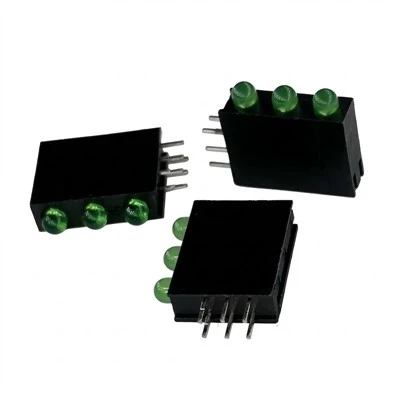
If you’re interested in talking more about your specific needs—whether it’s home lighting, commercial, industrial, automotive, or anything else—reach out to our team to chat about pricing, specs, and how we can help you maximize energy efficiency with Chip LEDs. We’re here to answer any questions, no pressure, no sales pitches that go in one ear and out the other. I’ve been in this game long enough to know that trust is more important than a big order, and we want to build long-term relationships with every client.
LED Neon Stip References
- U.S. Department of Energy. "Lighting Facts: Energy Savings from LED Lighting." 2023
- EPA. "Greenhouse Gas Emissions from Lighting." 2022
- International Energy Agency. "LED Market Trends and Efficiency Benefits." 2024
- Our in-house QC testing data, 2016-2024
WCN OPTO Group Co., Limited
WCN OPTO Group Co., Limited is one of the most experienced chip led manufacturers and suppliers in China, also supports customized service. We warmly welcome you to wholesale advanced chip led at competitive price from our factory. If you have any enquiry about pricelist, please feel free to email us.
Address: Buildings 1 and 2, No. 13, Songnan Road, Sino-Korea Industrial Park, Zhongkai High tech Zone, Huizhou, Guangdong,China
E-mail: williamzhang@wcnopto.com
WebSite: https://www.wcnopto.com/
