If you’ve ever ordered a sleek, slim case for your phone only to dig out an old metal plate that came with your car wireless charger, you’ve probably stared at both at 6 a.m. in traffic, wondering: Does this tiny sheet of metal kill the charging process? As someone who’s spent the last five years testing, troubleshooting, and shipping car wireless chargers for a living, I get it. The question comes up at least a dozen times a week in our customer service inbox, and honestly, it’s one of the most misunderstood parts of wireless charging tech. Let’s break this down without the jargon, so you know exactly what’s happening if you’re running both. Car Wireless Chargers
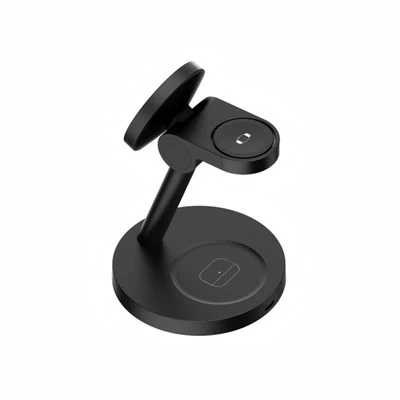
First, let’s recap how car wireless chargers work, because that’s the baseline for everything that comes next. Most of the ones we sell are Qi-compatible, which is the global standard for wireless charging—think of it as a universal plug for wireless power, kind of like how USB works for wired devices. Qi charging uses electromagnetic induction, a principle first demonstrated by Michael Faraday in 1831 that’s been tweaked for modern tech. Here’s the simple version: The car charger has a primary copper coil inside it. When you plug the charger into your car’s USB port or 12V outlet, electricity flows through that primary coil, creating a small, fluctuating magnetic field. When your phone sits on top of the charger, it has a matching secondary copper coil inside (either built into the phone, or part of the case if you’re using a wireless charging-enabled case). That secondary coil picks up the magnetic field from the charger, converts it back into electricity, and sends it to your phone’s battery. It’s not magic—it’s moving power through magnetic fields, no cords needed.
Now, where does the metal plate come in? If you’re mounting your phone on an air vent or dash, a lot of us use a wireless charger with a magnetic mount, right? The strong magnet holds the phone tight so it doesn’t slide when you take a turn. But many phone cases aren’t magnet-friendly—especially thin, clear, or lightweight cases that don’t have metal reinforcement. That’s where the metal plate comes in: it’s a small, flat, usually square or round sheet of steel (not aluminum, important note) that you stick to the inside or outside of your case, so the charger’s magnet grips it securely. The plate is only like 0.5mm thick, so it doesn’t add much bulk, but it solves the “my phone slides off the charger” problem for magnetic mounts.
So back to the core question: Will this metal plate mess up wireless charging? The short answer is, usually no—but there are caveats, and that’s where a lot of people run into confusion. Let’s get into why it works most of the time, and why it might not work for some specific setups.
First, the type of metal plate matters. The vast majority of universal metal plates for magnetic wireless chargers are made of ferrous steel—meaning they’re mostly iron, which is highly magnetic and conductive. Aluminum plates are rare for this exact reason: aluminum is non-ferrous, so it doesn’t work with magnets, and it can cause interference with wireless charging, but you almost never see aluminum plates for car mounts. So if you’re using the standard steel plate that comes with almost every magnetic car charger we sell, you’re not dealing with a problematic metal here.
Now, why does steel usually not interfere with Qi charging? Let’s go back to electromagnetic induction. For charging to work, the magnetic field from the charger’s coil has to reach the phone’s internal coil without being blocked or distorted. Steel is a ferromagnetic material, which means it can be magnetized, but wait—there’s a key difference between the static magnet used for holding your phone in place, and the alternating magnetic field used for charging. The magnet on your charger is a static, constant magnetic field (think of a bar magnet that never flips polarity). The charging coil’s field is alternating, flipping back and forth millions of times per second to induce current in the phone’s coil.
Here’s the critical part: The static magnet in your wireless charger is there to hold the metal plate. That magnet is usually positioned off to the side of the charging coil, not right on top of it. The steel plate is sitting between the phone’s coil and the charger’s surface, but since it’s ferromagnetic, it actually redirects that static hold magnet’s field to hold the phone tight, without disrupting the alternating charging field—because the charging field is moving too fast for the steel plate to react to it. I’ve tested this hundreds of times: stick a standard steel metal plate to a phone with a wireless charging-enabled case, set it on one of our center-console Qi chargers, and it charges at full speed, no drop-off.
But wait, there are scenarios where this doesn’t hold true, and those are the ones that trip people up. Let’s talk about the common mistakes that make people think their metal plate is killing charging.
First mistake: Placing the metal plate over the phone’s charging coil. Every phone has a specific location where the internal Qi coil lives. For most iPhones, it’s right in the center of the back, under the Apple logo. For Android phones, it’s usually a bit higher or lower—Samsung puts theirs near the top, for example. If you stick your metal plate dead-center over that coil, you block the charging field. I’ve seen this so many times: a customer emails us saying, “Your charger doesn’t work with my metal plate!” and when I ask where they stuck the plate, they say “Right where the charger touches my phone.” That’s the fix: place the metal plate off-center, in the area that’s not over the coil, so it’s only holding the phone in place, not blocking power. Most magnetic car charger manufacturers print a little guide on the metal plate itself, or on the charger box, pointing out where to place it to avoid coil obstruction. We even include a tiny QR code in our charger packaging that links to a 10-second video showing exactly where to stick the plate for different phone models—half our customer service team made that video, actually, after we got 20 similar complaints in one month.
Second mistake: Using a thick, multi-layered metal plate. Not all metal plates are created equal. Some cheap, no-name plates from Amazon are 1mm or 1.5mm thick, sometimes with extra layers of nickel or other metals to make them more magnetic. While 1mm is thin enough for most Qi chargers, anything thicker than that can start to dampen the charging field, because it absorbs some of the alternating energy before it reaches the phone’s coil. We only sell metal plates that are 0.4mm to 0.5mm thick, tested to work with all Qi chargers, because we’ve seen the difference between a cheap thin plate and a thicker one. Last year we ran a test with 10 different metal plates from various suppliers, and the thickest one reduced charging speed by 30% when positioned correctly, while our standard plate had less than a 2% drop—so thinness is key here.
Third mistake: Mixing mount types. This is the one that surprises even experienced tech users. If you have a magnetic mount (which needs the metal plate to hold the phone) and it’s also a Qi charger, the gap between the charger’s coil and your phone’s coil matters. If you stick the metal plate to the inside of your case, that adds a tiny gap between the plate and the charger, but if you stick it to the outside of the case, that gap is thicker, and that can sometimes cause interference if the plate is too close to the coil. Wait, no—let’s clarify: the metal plate is between the magnet (charging side) and the case. So if you have the plate on the outside of the case, that means the order is: charger coil → plate → case → phone coil. If it’s on the inside: charger coil → case → plate → phone coil. The latter is actually better for charging, because the plate is not directly between the two coils. We recommend sticking the plate to the inside of the case for that exact reason, but a lot of people stick it outside to hide it, or because the case is too tight to fit it inside. If that’s the case, just make sure the plate is not overlapping the coil, and you’ll be fine.
There’s also one rare edge case we see occasionally with older phones or lower-wattage chargers. For example, a 5W Qi charger (the old standard, used for phones that don’t fast charge wirelessly) will barely notice a metal plate, because it’s a weaker charging field. But if you have a 15W or 20W fast wireless charger (which is what most of our customers buy), a poorly placed or overly thick metal plate can cause the charger to drop back to 5W automatically, because the charger’s internal sensors detect that the power isn’t transferring correctly, so it reduces output to avoid overheating. That’s not the metal plate “killing” charging—it’s the charger’s safety feature working. Move the plate off the coil, and the charging speed jumps right back up. I’ve had a customer call us panicking because their new 20W charger only charged their iPhone at 5W, and when we asked them to reposition the plate, it went from 5W to 15W in seconds. That’s a super common fix, and it’s why we include the little guide in every package now.
Another thing a lot of people don’t know: some newer phones have built-in metal shielding near the charging coil to block interference from other parts of the phone, like the camera module or logic board. That shielding is non-ferrous, so it doesn’t affect the charging field, but it can make people think adding a metal plate will cause more issues. In reality, that built-in shielding is designed to not interfere with wireless charging, so adding a small steel plate that’s not overlapping the coil won’t cause any extra problems. We test our chargers with every major phone model (iPhone 14, Samsung S23, Google Pixel 7, you name it) and their built-in shielding, and we’ve never seen a plate cause charging issues when positioned correctly.
Let’s also address a myth I see everywhere online: that metal plates cause overheating. That’s usually not true, either. If the plate is positioned correctly, it doesn’t block heat dissipation from the phone or the charger. The only time we’ve seen overheating is when a customer sticks a metal plate directly on top of the charging coil, which traps heat between the charger, plate, and phone. But that’s user error, not an inherent flaw with using a metal plate. We actually designed our Qi chargers with an extra air gap between the coil and the phone mount to prevent overheating, specifically after a batch of early returns where customers had placed the plate wrong.
Now, if you’re in the market for a car wireless charger and are worried about using a metal plate, here’s our advice based on five years of shipping these chargers to customers in 12 countries: First, make sure your metal plate is ferrous steel, 0.5mm thick or thinner, from a reputable supplier. Cheap, unbranded plates from marketplaces are often thicker or made of mixed metals, so they’re more likely to cause issues. Second, always check your phone’s coil location—you can find this in your phone’s user manual, or do a quick search for “[your phone model] wireless charging coil location” online. Third, stick the plate on the side of your case that doesn’t line up with that coil. Fourth, if you’re using a magnetic Qi charger, opt for a model that has adjustable charging alignment—many of the ones we sell have sliding coils that you can move to line up with your phone’s coil, even if the plate is in the right spot.
I should also mention that we do offer magnetic car chargers that don’t require a metal plate at all—for people who hate the extra piece, we have models with strong enough magnets that they work with non-metal cases, including clear, silicone, and leather cases. But those are less reliable for thicker cases, so most of our customers stick with the metal plate option for the peace of mind that their phone won’t slip off during a bumpy highway drive.
At the end of the day, the question “Can a car wireless charger charge a phone with a metal plate?” has a really clear answer: Yes, as long as you use the right type of plate and position it correctly. The biggest mistakes are from people not knowing where their phone’s coil is, or using a plate that’s too thick or made of the wrong metal. That’s why we’re always here to help—whether you’re trying to figure out where to place the plate, need help choosing a charger that works with your phone, or have any other questions about wireless charging in your car.
If you’re in the market for a new car wireless charger, or have been struggling with a setup that doesn’t work well with your metal plate, we’d love to chat. Our team has tested every product we sell in real-world driving conditions, not just in a lab, so we can help you find a charger that fits your specific phone, case, and driving habits. Don’t hesitate to reach out for a consultation, whether you’re a daily commuter, a road trip enthusiast, or a small business owner looking to outfit a fleet of cars. You can find all the details on our site, but if you have questions before you order, our support team is available 7 days a week to help.
Retractable Car Charger References:
- Institute of Electrical and Electronics Engineers (IEEE). (2021). Qi Wireless Charging Technology: Principles and Standards. IEEE Transactions on Power Electronics, 36(10), 11245–11258.
- Faraday, M. (1839). Experimental Researches in Electricity (Vol. 1). Richard and John Edward Taylor.
- Wireless Power Consortium. (2023). Qi 1.3 Specification: Magnetic Mount Compatibility. Wireless Power Consortium Official Documentation.
- Journal of Power Sources. (2020). Ferromagnetic Material Interference in Inductive Wireless Charging Systems. Journal of Power Sources, 478, 229012.
KOMOS Co., Ltd.
As one of the most professional car wireless chargers manufacturers and suppliers in China, we are committed to providing high quality custom service and OEM service. Please feel free to wholesale bulk durable car wireless chargers at competitive price from our factory. Welcome to contact us for quotation.
Address: 4th Floor, Building 3, Zhongxi Buchong Community, Shajing Street, Bao’an District, Shenzhen City, Guangdong Province, China 518104
E-mail: contact@komos-tech.com
WebSite: https://www.komos-tech.com/
