If you’ve ever stood in front of a CNC lathe at a job shop or production facility, staring at a shelf stacked with end mills, inserts, and holders, wondering why one tool costs twice as much as another yet delivers half the tool life, you’re not alone. As a CNC lathe supplier who’s spent the last 12 years working directly with machinists, production managers, and small shop owners across North America, I’ve lost count of how many times I’ve heard, “I just grab whatever insert I used last time and hope it works.” That’s a mistake—one that costs shops thousands in scrap, downtime, and excess tooling every month. Selecting the right cutting tool for a CNC lathe isn’t just about grabbing the most expensive option or the one with the shiniest packaging. It’s a deliberate, data-backed process that ties directly to your lathe’s capabilities, your workpiece material, and your production goals. CNC Lathe
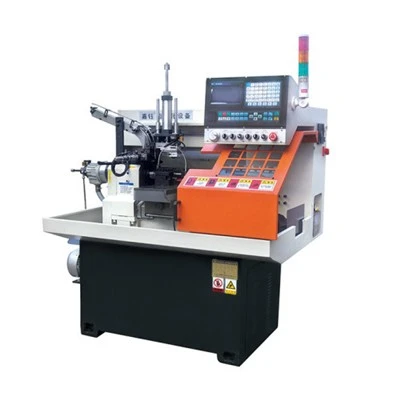
Let’s start with the basics: before you even look at a tool’s material or coating, you have to align your choice with what your CNC lathe can actually do. Too many machinists overlook this first step, and it leads to avoidable tool failure. For example, if your lathe has a maximum spindle speed of 3,000 RPM, you don’t need a tool rated for 10,000 RPM—running a high-speed tool on a low-capacity spindle will cause premature edge chipping, not to mention wasted money. I once worked with a small job shop in Ohio that spent $12,000 on a set of solid carbide end mills for a 4-axis lathe, only to find their machine couldn’t get the speeds and feeds needed to make the tools last. They ended up replacing those tools a third faster than expected, just because they didn’t check their lathe’s technical specs first.
The next critical factor is your workpiece material. This is the foundation of any tool selection, and it’s where most people get tripped up. I like to break materials into four core categories for turning: carbon steel, stainless steel, aluminum, and exotic alloys like titanium or Inconel. Each one demands a completely different tool geometry and coating, and mixing them up is a fast track to scrap parts.
Carbon steel, for instance, is the most common material in general machining, and it’s forgiving enough that you can use a few different tool types. Solid carbide tools with a titanium nitride (TiN) coating work well here, because TiN adds a hard, slippery layer that reduces friction between the tool and the steel, lowering heat buildup and extending tool life. The key for carbon steel is to pick a tool with a neutral or slightly positive rake angle—this shape shears the material cleanly without putting too much stress on the cutting edge, which is perfect for low-cost, high-volume parts like bolts or shafts.
Stainless steel is trickier. It’s austenitic, meaning it work hardens very quickly when cut—one wrong pass, and the surface of your part becomes so hard that your tool will chip in minutes. For stainless, I always recommend tools with a titanium carbonitride (TiCN) or aluminum titanium nitride (AlTiN) coating. AlTiN is especially good because it can withstand temperatures up to 1,200°C, which is critical when you’re cutting a material that generates so much heat. You also need a stronger, more negative rake angle for stainless—this pushes the material away from the cutting edge and prevents that hardening layer from forming. Last year, a customer in Chicago was having trouble with their stainless steel pump impeller parts, using a basic TiN coated tool that lasted only 10 pieces. Switched to an AlTiN coated tool with a negative rake angle, and they got 55 parts per tool—no extra cost, just the right selection.
Aluminum is a whole different ballgame. It’s soft and has a tendency to weld to the tool edge, creating a built-up edge (BUE) that ruins part finish and tool life. For aluminum, you want tools with a diamond-like carbon (DLC) coating or uncoated carbide—DLC is ultra-smooth, so it prevents material from sticking. You also need a very sharp, positive rake angle, because that reduces cutting forces and minimizes BUE. I’ve seen shops try to use steel-cutting tools on aluminum, and they end up with parts that have a rough, gummy finish, plus tools that wear out in hours. The right tool for aluminum doesn’t just produce a better part—it cuts production time because you don’t have to spend extra time deburring.
Exotic alloys like titanium or Inconel are the most challenging, and they require tools made from solid carbide with a heavy AlTiN coating, often with a blast-finished edge to reduce heat. These materials generate extreme heat at the cutting zone, and a tool that can’t handle that heat will fail almost immediately. The geometry here is often a mix of positive and negative rake—strong enough to handle the material’s hardness, sharp enough to cut without excessive force. That same Ohio shop I mentioned earlier was machining titanium aircraft brackets, and they were using a standard coated insert that broke every 2 parts. Switched to our custom Ti-grade insert, and they now get 12 parts per insert, with no breakage.
Once you’ve matched your tool to the material, you have to consider your production volume and tolerance requirements. If you’re running a high-volume job, like 10,000 identical bolts a week, you’ll want to prioritize tool life and repeatability. That means indexable inserts, not solid carbide tools—indexable inserts let you change the cutting edge without replacing the entire tool body, which cuts tooling costs by up to 70% for high volume. You also want inserts with a uniform geometry, so every edge cuts the same way, ensuring consistent part tolerance every time. For low-volume, custom parts, solid carbide tools might make more sense—you don’t want to spend the extra time setting up indexable inserts for a job that only needs 5 parts. Tolerances matter too: if you need a part that’s within ±0.001”, you’ll need a tool with a precision-ground edge, not a standard insert, because even a 0.0005” variation in the cutting edge will throw off your tolerance.
Another factor many machinists overlook is tool holder compatibility. A tool is only as good as its holder, and a cheap, poorly made holder can turn a top-tier insert into a waste of money. If your holder has runout (wobble) at the cutting edge, your tool will wear unevenly, and your part finish will be rough. For CNC lathes, I always recommend shrink-fit holders or hydraulic holders, because they have almost zero runout, better than collet holders. A customer in Detroit was getting a 12 Ra finish on their aluminum parts using a cheap collet holder and a DLC coated tool, and they couldn’t get it below 8 Ra. Switched to a shrink-fit holder, and the same tool gave them a 5 Ra finish—just a $200 holder upgrade, no new tool needed. It’s a small investment that makes a huge difference in quality.
Let’s also talk about speeds and feeds, because even the best tool in the world will fail if you run it at the wrong speed. For turning operations, the cutting speed (surface feet per minute, SFM) is the most important number to get right. For carbon steel, SFM is usually 200-400; for stainless, 150-250; for aluminum, 1,000-2,000; for titanium, 50-100. If you run a carbon steel tool at 1,000 SFM, it’ll overheat and wear out in minutes; run an aluminum tool at 100 SFM, it’ll weld to the edge and break. The good news is that most modern CNC lathes have built-in calculators that tell you the right speed for your tool and material, but you still need to adjust for your specific setup. For example, if you’re running a dry cut instead of a flood coolant, you’ll need to lower your speed by 10-15%, because there’s no coolant to carry away heat. I always tell customers to start at the manufacturer’s recommended speed, then test a part, adjust as needed—small tweaks can double your tool life.
I also can’t stress enough the value of testing. Too many shops stick to one tool type forever, even when their material or production changes. A small test run can save you a lot of money in the long run. Last year, a customer in Pittsburgh was machining 304 stainless steel parts, and they were using a standard TiCN insert that lasted 20 parts. They tried our AlTiN insert as a test, and it lasted 45 parts—no other changes, just a different tool. It cost them an extra $0.10 per insert, but they saved $1.50 per part in tooling costs, and doubled their production rate. That’s the power of testing—you don’t have to switch everything at once, just test a tool on a small job and see what works.
Now, let’s address some common mistakes I see every day. First, going for the cheapest tool. A $5 insert that lasts 10 parts is way more expensive per part than a $10 insert that lasts 50 parts. I’ve seen shops that try to save $5 per insert end up spending $2,500 extra a month in tooling costs. Second, ignoring coolant. If you’re cutting any material above low carbon steel, you need proper coolant—either flood, mist, or through-tool coolant. Coolant not only carries away heat, but also lubricates the cutting zone, reducing friction. A tool with coolant will last 30-50% longer than the same tool running dry. Third, not inspecting tools before use. Even a new insert can have a small chip from the manufacturing process, and running a chipped insert will ruin your part and break your tool. I always tell machinists to check every insert for chips, burrs, or coating damage before loading it into the holder.
At the end of the day, selecting the right CNC lathe cutting tool is about matching three things: your lathe’s capabilities, your workpiece material, and your production needs. There’s no one-size-fits-all tool, but by breaking it down step by step—checking your lathe specs, matching to material, considering volume and tolerances, verifying holder compatibility, and testing speeds and feeds—you can cut tooling costs, reduce downtime, and improve part quality.
If you’re still not sure which tool is right for your specific job, or if you’re looking to upgrade your tooling to boost your production, we’re here to help. We work with shops of all sizes, from small custom job shops to large aerospace manufacturers, to find the right tooling solution for their needs. Reach out to our team to discuss your CNC lathe cutting tool requirements, and we’ll provide tailored recommendations to help you get the most out of your machine and your production.
Horizontal Machining Center References
- DeVries, W. R. (2018). Metal Cutting: Theory and Practice. Society of Manufacturing Engineers.
- Shaw, M. C. (2005). Metal Cutting Principles. Oxford University Press.
- American National Standards Institute. (2020). ANSI B211.1-2020: Cutting Tools for Turning Operations.
- Machinery’s Handbook. (2021). Tooling for CNC Turning. Industrial Press.
- Smith, G. (2019). Optimizing Cutting Tool Selection for High-Volume Production. Journal of Manufacturing Processes.
Taizhou Qiyang Trading Co., Ltd.
As one of the most professional CNC lathe manufacturers and suppliers in China, we’re featured by quality products and good price. Please rest assured to buy bulk CNC lathe for sale here and get quotation from our factory. Customized orders are welcome.
Address: Zhenhai Village, Binhai Town, Wenling City, Taizhou City, Zhejiang Province
E-mail: qycncmachine@outlook.com
WebSite: https://www.qycncmachine.com/
