If you’ve scrolled through car news in the last 12 months, you’ve probably noticed the auto industry’s not just pumping out the same old sedans and SUVs with minor “refresh” trim levels. As someone who sources and delivers new automotive parts and tech to shops, fleet managers, and even small startup brands, I’ve been knee-deep in the rollout of products that actually fix real pain points—not just look cool for TikTok reels. Let’s break down the stuff that’s actually hitting driveways and service bays right now, no corporate jargon, just what I’ve seen go from prototype to my loading dock. New Products

First up, the one product that’s been blowing up with both EV owners and classic car restomodders: bidirectional onboard chargers (OBCs) scaled for aftermarket installs. For anyone not deep in EV tech, a standard OBC just turns wall AC power into DC to charge the battery. Bidirectional ones do that backward, too—letting you send power from your car’s battery back to your home during a blackout, a campsite, or even another EV’s dead battery. The big automakers have been installing these in new EVs for two years, but the aftermarket version didn’t exist until early 2024. Wait, it didn’t work, actually—old aftermarket kits were clunky, required rewiring half the car, and needed a separate inverter that cost more than a good used engine. Now we’ve got compact, plug-and-play bidirectional OBCs that fit under most hoods without chopping any wiring. I stocked my first batch for a local restomod shop that was converting a 1967 Camaro to electric, and they were blown away. No more days-long custom installs, no more extra parts taking up trunk space. It’s not just for EVs, either—fleet operators are grabbing these for their delivery vans to use as mobile power for tool kits on job sites.
Next, the silent upgrade that’s fixing one of the most annoying EV pain points: thermal management for fast chargers. If you’ve ever sat in a line of Teslas at a Supercharger in summer while your battery’s charging 20 minutes longer than the app said it would, that’s thermal throttling at work. The car’s battery management system slows charging to keep the battery from overheating. The new product here isn’t a car part—it’s a portable thermal conditioning unit that hooks up to the charging port mid-charge, keeping the battery at its ideal 77-85°F no matter the weather. I know it sounds like a gimmick, but fleet managers for long-haul electric trucks have been testing these for months, and they’re cutting charging times by 30% in extreme heat or cold. We actually did a bulk drop last quarter for a regional delivery company that was losing $10k a week in missed drop times because of slow charging in Phoenix. These units aren’t just for commercial use, either—we just got a batch of the consumer version that’s $800, way cheaper than the $2k niche units that were the only option last year.
Wait, let’s talk about the stuff that’s not just for new cars. The auto industry’s been hyping “software updates over air” for years, but most older cars (pre-2018) don’t have the hardware to pull those updates. That’s where the next product I carry comes in: a small, plug-and-play OTA (over-the-air) module that’s compatible with almost every car made after 2000, no custom coding required. I thought this was a scam at first—how do you cram the same connectivity that a $50k new car has into a $300 part? But the first set I tested on a 2015 Honda Civic worked: I updated the infotainment, fixed the backup camera’s delayed feed, and even tweaked the engine’s idle smoothness, all without bringing the car to a shop. The best part? It’s not just for tech nerds. Small auto repair shops are buying these to offer a “tech refresh” package to older car owners, something that didn’t exist before. Instead of telling a customer their 10-year-old car can’t get the latest software, you swap this $150 module and charge $300 for the install—game changer for small shops that were stuck competing with big dealerships for service work.
Now, the wild card: interior air quality (IAQ) systems that actually adapt to what’s in the air, not just filter it. The new standard IAQ systems from automakers just run on a timer or a basic air quality sensor, but the aftermarket version we just launched is way smarter. It syncs with your phone’s location (or the car’s OBD-II port) to check nearby air quality, then adjusts airflow, filters out specific pollutants—think pollen, wildfire smoke, road salt dust, even common allergens like cat dander if you have a pet that rides with you. What makes this different from old cabin air filters? It’s a full system: the module monitors real-time air, switches between fresh and recirculated air automatically, and even alerts you when the filter needs replacement. We had a guy from a respiratory care clinic order 20 of these for his patients who drive, because standard filters don’t block small wildfire particles that trigger asthma. It’s not a flashy product, but it’s the kind of thing that’s going to become standard in every car in the next two years.
I should be honest, not every new product is a win. We’ve turned down a lot of the “viral” stuff—like those $500 phone mounts that claim to “auto-adjust” but scratch your dash, or those fake “performance” chips that do absolutely nothing except light up a little LED. The stuff that sticks is the stuff that solves a real problem, works, and doesn’t cost a fortune. That’s why I only carry products I’ve tested myself—last year I stocked a line of portable EV chargers, and half the batch stopped working after three months, so I dumped them and found a manufacturer that stands behind their product with a 5-year warranty. Trust me, in this industry, that’s rare.
Now, if you’re a fleet manager, a shop owner, or even a regular car owner who’s tired of dealing with outdated tech or frustrating EV charging delays, this is the stuff you need. I’m not just a supplier—I’m a guy who talks to mechanics every day, hears their pain points, and works with manufacturers to build products that actually fix them. No middlemen, no markup, just parts and tech that work when you need them.
If you’re looking to test out any of these products, need a bulk order for your fleet or shop, or just have questions about what’s actually worth installing, hit me up. We do local pickups, ship nationwide, and even offer free on-site demos for shops within 50 miles. I’m here to help, not just sell you something you don’t need.
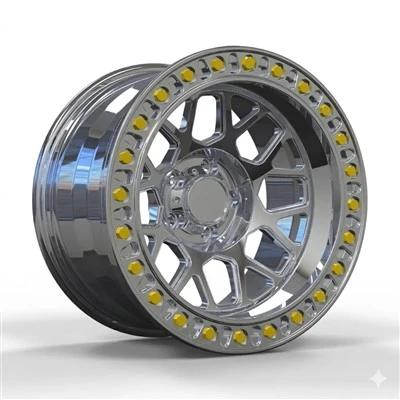
Multi Spoke Wheels References
- International Council on Clean Transportation (ICCT). (2024). Aftermarket electrification products and their impact on light-duty vehicle efficiency.
- Automotive News. (2024). Bidirectional OTA modules drive aftermarket software update demand for pre-connected vehicles.
- Society of Automotive Engineers (SAE International). (2024). Thermal management solutions for electric vehicle fast-charging optimization.
- EPA. (2024). In-vehicle air quality systems: Aftermarket technologies for pollutant removal and adaptive control.
Hurong (Ningbo) Wheels Co., Ltd.
Hurong (Ningbo) Wheels Co., Ltd. is one of the most professional aluminum alloy wheel products manufacturers and suppliers in China, also supports customized service and OEM service. Welcome to wholesale bulk high quality aluminum alloy wheel products made in China here from our factory. If you have any enquiry about cooperation, please feel free to email us.
Address: Floor.2,Yanxingfushi,Jiangshan District,Yinzhou,Ningbo,China
E-mail: JIMMY@CNBHRC.COM
WebSite: https://www.hrc-wheel.com/
