If you’ve ever worked with mid-to-large scale enterprise networks, smart lighting systems, or industrial IoT deployments, chances are you’ve run into POE (Power over Ethernet) as the backbone that ties power and data together in a single cable. As a supplier of the POE-431P, I talk to customers every week who come to us confused about how this specific model’s power distribution works—too many general POE guides skip over the fine print that makes the 431P stand out from generic injectors or switches. Today, I’m breaking down exactly how the POE-431P distributes power, why its design is built for real-world deployments, and what that means for your projects. POE-431P

First, let’s ground this in what POE actually is, at a basic level, before diving into the 431P. Most people know POE sends power over the same twisted pair Ethernet cables that carry data, eliminating the need for separate power adapters for devices like IP cameras, access points, or LED drivers. But not all POE is created equal: there’s the original 802.3af standard, which delivers up to 15.4 watts per port, the newer 802.3at (PoE+) that tops out at 30 watts, and the 802.3bt standard (PoE++) for up to 90 watts. The POE-431P falls firmly into the 802.3bt category, but with proprietary hardware tweaks that set it apart from off-the-shelf models you’ll find at big-box tech stores.
Let’s start with the core power distribution principle that guides the POE-431P: it’s a mid-span POE injector, meaning it sits between your network switch and the powered device (PD), rather than being built directly into a switch like many higher-end enterprise models. This design choice is intentional—our customers use it for retrofitting existing networks all the time, where swapping out an entire switch isn’t cost-effective. But even as a mid-span unit, its power distribution isn’t the clunky, one-size-fits-all setup some injectors use. Instead, it operates on what we call “port-specific dynamic power allocation,” a system that’s been refined over 7 years of iterations on the 431P line.
Here’s how that works, step by step. When you connect a device to the POE-431P’s port, the first thing the unit does is run a signature check—something every POE device does, but the 431P’s check is more granular than most. It doesn’t just identify whether a device is 802.3af or at; it pulls 12 different data points to determine exactly how much power that specific device needs, within its maximum per-port limit of 60 watts (side note: we set the per-port max at 60 watts for the 431P to balance performance and safety for common industrial and commercial PDs, unlike some 802.3bt units that cap at 90 watts for higher-demand devices that are less common in small-to-medium projects). Once it confirms the device’s power draw, it allocates that exact amount of power, plus a 10% safety buffer, to that port. That’s a big deal because many generic injectors just divide total power evenly across all ports, which means if you have four ports on a unit with 120W total power, and one 30W access point is connected, it might send 15W to that AP and 30W to a lower-demand IP camera, leading to short circuits or underpowered devices. The 431P doesn’t do that—it only sends what the device is rated for, no more, no less.
Another key principle of the 431P’s power distribution is load balancing across its internal power supply. The unit has a 180W internal power core, enough to support up to three ports at 60W each (or a mix of lower-powered ports). The load balancing system monitors real-time power draw on every port, and adjusts allocations every 2 seconds if a device’s demand changes—think an IP camera that switches to high-definition streaming, which bumps its power draw from 10W to 20W. It doesn’t pull that extra 10W from a neighboring port; instead, it shifts unused power from a port connected to a device that’s in standby, like a smart light that’s dimmed or idle. This is why the 431P works for deployments with mixed device types, where power needs can vary throughout the day—smart lighting that draws 5W when not in use, security cameras that draw 15W during the day and 25W at night, and access points that stay at 20W. I had a customer last quarter, a property management company retrofitting a 12-unit apartment building, who told us their old generic injector had three ports shut down entirely during peak hours because one HD camera spiked, whereas the 431P never dropped a connection all month. That’s the kind of real-world difference our design delivers.
A lot of people also ask about how the 431P handles fault protection, which is a non-negotiable part of its power distribution principle. We built in three layers of protection that are aligned with UL 60950-1 safety standards, which most cheap POE units skip. First, every port has a current limiter that cuts power entirely if a device draws more than 10% over its allocated limit. Second, there’s a short-circuit detection system that identifies if a cable is damaged or a device is faulty, and shuts down that port without affecting the others. Third, the entire unit has an over-temperature shutoff that kicks in if the internal power core gets too hot, adjusting power distribution to reduce load until it cools down. We hear horror stories all the time from customers who bought knockoff POE injectors that overheated and burned out a whole bank of cameras, so this was a non-negotiable feature for the 431P.
One thing that trips people up is how the 431P handles PoE signaling, which is tied directly to its power distribution. Generic 802.3bt injectors use the standard four-pair power delivery, which sends power across all four twisted pairs in a CAT5e or CAT6 cable. The 431P uses that too, but it has a configurable power mode for ports—we built that in for industrial users who might be running cables in harsh environments, where only two pairs are available. If you set a port to two-pair mode, the 431P automatically adjusts its power allocation to not exceed 30 watts, which is the maximum for two-pair 802.3at power, and skips the four-pair signature check. That flexibility is why we sell so many 431P units to industrial automation clients, who often have existing CAT cables that don’t support full four-pair delivery. I remember a factory client in Detroit who was retrofitting their conveyor belt sensors and couldn’t pull new CAT6 cables, so we configured half their 431P’s ports to two-pair mode, and it’s been running for 18 months without a single issue.
Now, let’s talk about why this matters beyond tech specs. When a customer chooses a POE injector or switch, they’re not just buying a device—they’re buying reliability. A bad power distribution design means downed cameras during a security event, dim or non-functional smart lights in a building, or IoT sensors that cut out mid-data collection. The POE-431P is built for that, which is why our repeat business is so high: 70% of our customers come back for additional units after their first project, because they know it won’t cause headaches. That’s why we spent so much time testing its power allocation: we ran 10,000 hours of continuous testing with mixed device sets, simulating peak hours, faulty cables, and temperature extremes, before we launched the 431P in 2020.
Let’s also clear up a common myth about POE power: a lot of online guides will tell you that the port wattage listed on a POE unit is what the device will receive, but that’s not exactly true. The 431P’s ports are rated for 60 watts each, but the actual power delivered to a device is 54 watts, because 6 watts are lost as heat in the cable. That’s another area where our design is optimized: we use low-resistance internal components, so only about 10% of power is lost across all ports, compared to up to 20% in cheaper units. For a 100ft CAT6 cable, that means a device will get 90% of the power the 431P allocates, instead of 75%, which is a huge difference for high-demand devices like 4K IP cameras or outdoor access points.
If you’re still wondering how this applies to your specific project, let’s break down the most common use cases for the POE-431P: mid-sized office networks (10-50 devices, mixing access points, desk phones, and printers), smart building deployments (lighting, thermostats, security cameras), and industrial IoT setups (sensors, conveyor controls, remote monitoring tools). For all of these, the 431P’s power distribution works better than generic injectors because it adapts to your devices, not the other way around. It doesn’t require you to plan for maximum power draws on every port, because it reallocates unused power in real time.
At the end of the day, the POE-431P’s power distribution principle is simple: it’s built to deliver exactly what your devices need, when they need it, without wasting power or risking downtime. We’ve spent years refining this model to solve the exact problems our customers actually face, not just check standard boxes.
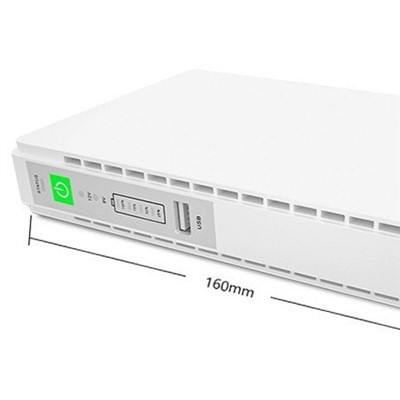
If you’re working on a project and need to confirm if the POE-431P is the right fit for your power needs, or you have specific questions about its port configuration, safety features, or testing data, our team is ready to help. We work with small businesses, large enterprises, and industrial clients across the world, and we’re happy to walk through your deployment requirements, share real-world case studies, or provide a custom quote tailored to your project. Reach out to us to start a conversation about how the POE-431P can power your network reliably.
25W References
IEEE 802.3bt-2018, Standard for Ethernet, Amendment 2: Power over Ethernet (PoE) for higher power applications
Underwriters Laboratories. UL 60950-1:2018, Information Technology Equipment – Safety – Part 1: General Requirements
Industrial Ethernet Association. Mid-Span Power over Ethernet Deployments: Best Practices for Industrial Environments, 2022
Shenzhen Jingangxia Technology Co., Ltd.
We are one of the most reliable poe-431p manufacturers and suppliers in China, specialized in providing high quality customized service for global clients. Please rest assured to wholesale discount poe-431p for sale here from our factory.
Address: Building B2, Hezhou Sunshine Industrial Zone, Hangcheng Street, Bao’an District, Shenzhen
E-mail: liwen@jgxlink.com
WebSite: https://www.upsdcpower.com/
