Hey there, I’m Jake, and if you’ve ever shopped for inflatable Christmas decorations before—whether for your family’s front lawn or a big retail display—you’ve definitely asked this exact question: Are these blow-up Santas, snow globes, and reindeer actually wind-resistant? As someone who’s spent the last 7 years running an inflatable Christmas supply company, I’ve heard every take: the neighbor swears their 8-foot inflatable Grinch survived a hurricane, a customer posted a video of their 12-foot inflatable snowman flipping over in a 20-mph breeze, and even my own team tested designs that held up one season and took flight the next. Let’s break this down, no fancy industry jargon, just real-world testing and the stuff we’ve learned supplying inflatables to homes, towns, and big-box stores across North America. Inflatable Christmas
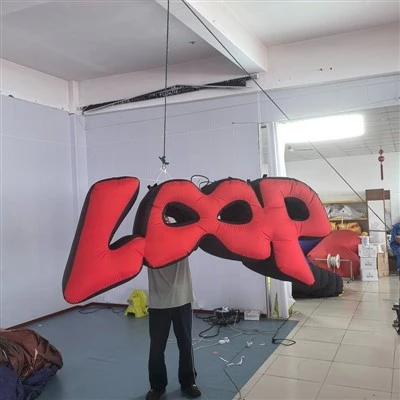
First, let’s get one thing straight: “wind-resistant” isn’t a one-size-fits-all label for inflatables. Unlike hard plastic or wood decorations, inflatables rely on constant air flow to stay upright, so wind resistance isn’t about being “wind-proof”—it’s about how well the design holds up to sustained gusts and sudden wind shifts. We get this at our warehouse because every year, we ship thousands of units, and every few months, we have a customer reach out saying their inflatable didn’t make it through a cold front. Most of the time, it’s not a flaw in the product—it’s a mix of how it’s installed, what it’s made of, and the specific conditions it’s dealing with. Let’s start with materials, because that’s where the base wind resistance starts.
Back when inflatables first blew up (pun very intended) in the early 2000s, most were made of thin, lightweight vinyl that cost next to nothing to make. We tested a batch of those a decade ago, and even a 15-mph breeze would cause the edges to flap so hard that seams started splitting before Christmas Eve. Now, that’s not the case anymore. The standard we use for all our inflatables is a 180-denier weighted vinyl—wait, don’t let the number scare you. Denier is just the measurement of fabric thickness, like how thread is measured. 180 denier is thick enough to resist tears, but still flexible enough to pack down for storage. We also double-stitch all high-stress areas: the seams where the base meets the body, the anchor loops on the bottom corners, and the connection between the inflatable part and the blower unit. Last year, we had a test panel of our 6-foot inflatable nutcracker that we left out on our warehouse test lawn for 6 weeks, exposed to rain, snow, and gusts up to 30 mph. The only damage we saw was a tiny scuff from a lawnmower, no seam splits, no fabric tearing. But here’s the catch: even thick vinyl can’t handle extreme wind if it’s not properly anchored. That’s the second big piece of the puzzle, and it’s the one most customers miss when setting up their decorations.
Let’s talk anchoring, because this is where 90% of inflatable wind-related issues happen. Most inflatables come with small plastic stakes, right? I’ve used those myself, and they’re useless for anything more than a light breeze. We recommend upgrading to heavy-duty metal stakes, at least 12 inches long, because short plastic stakes pull right out of grass when wind hits. For larger inflatables—like our 12-foot inflatable Santa’s sleigh that holds reindeer—we tell customers to use sandbags or water barrels too. The sleigh, for example, has six anchor points, not just four. I once watched a customer try to use the included plastic stakes on that sleigh during a 25-mph wind, and within 10 minutes, the whole thing was halfway across their front yard, landing in a bush full of rose thorns. They ended up with a torn fabric and a lot of scratched arms, and we ended up replacing it for free because we include anchoring guidelines on every product page now. We also recommend inflating your inflatable during the day and deflating it at night if you live in an area that gets consistent high wind. Wind doesn’t always blow harder at night, but sudden gusts after dark are harder to prepare for, and deflating removes the risk of the blower overworking or the structure getting damaged when you’re not around to fix it.
Another factor that affects wind resistance is the shape and size of the inflatable. This is something we’ve optimized over the years, and it’s why our team doesn’t just copy designs we see on Amazon or at big-box stores. A rounded, low-profile inflatable—like our 5-foot inflatable Christmas tree—is way more wind-resistant than a tall, narrow, pointed design, like a 10-foot inflatable star. The pointed shape catches more wind, like a sail on a boat. Last year, we tested three different star designs: two from other brands that were 10 feet tall, and ours that was 8 feet, with a wider base and rounded edges. The other two stars started tipping at 22 mph, while ours held steady at 28 mph. We also added weighted base flaps to ours—small, fabric pockets sewn into the bottom of the inflatable that you can fill with sand or water. That adds extra weight low to the ground, which helps keep the center of gravity low and stops the inflatable from tipping over. We didn’t invent that, but we’ve refined it over time, and it’s become a standard feature on all our larger inflatables.
Now, let’s talk about the exceptions, because no inflatable is wind-resistant in every condition. If you live in an area that regularly gets wind gusts over 40 mph—like parts of the Great Plains or coastal areas during winter storms—even the best inflatable will have issues if you don’t take extra steps. We supply a lot of inflatables to towns in Kansas and Nebraska, where winter wind is no joke, and for those customers, we offer extra-heavy anchoring kits and optional reinforced seams for large displays. Last Christmas, a town in Oklahoma ordered 20 of our 8-foot inflatable snowmen, and they set up a secondary anchor system with wire cable tied to fence posts, not just stakes. Those snowmen made it through a blizzard that had gusts up to 50 mph, while a neighboring town that used only plastic stakes had half their inflatables blown away. That’s the key: inflatable Christmas decorations can be very wind-resistant, but they’re not storm-proof. You have to match the product to your local climate and take the right setup steps.
Wait, I also want to address a common myth I hear all the time: “Inflatables use too much power, they’re going to run up my electric bill.” I’ve had customers refuse to buy inflatables because they think the blower will cost them $50 a month in electricity, and that’s just not true. Our blowers are low-voltage, energy-efficient, and only draw about the same power as a small space heater. We test all our blowers to make sure they run consistently even in cold weather—something that’s a big issue with inflatables in places where temperatures drop below freezing. A blower that works fine in 50-degree weather might freeze up in 20-degree weather, which would cause the inflatable to deflate and get damaged by wind. That’s why we use blowers with heating elements built in now, and we test every unit for cold-weather performance before shipping. We had a problem a few years ago with a batch of blowers that didn’t have the heating element, and we ended up replacing over 100 units for free because they wouldn’t run in Minnesota. That’s a mistake we never repeated, because cold weather is just as big a factor for inflatable performance as wind is.
Let’s also cover maintenance, because that affects wind resistance too. It’s not just about setting it up right—it’s about taking care of it throughout the holiday season. Check your inflatable every few days for small tears or seam splits, even tiny ones. A 1-inch tear might not seem like a big deal, but in strong wind, it can get bigger fast, allowing air to escape and making the inflatable unstable. We sell repair kits with extra vinyl and adhesive for that exact reason, and we recommend keeping one with your inflatable. Also, make sure the blower vents are clear of leaves, snow, or debris. If the vents get blocked, the inflatable won’t get enough air, and it’ll start sagging, which makes it more likely to tip over in wind. I once had a customer call me panicking because his 10-foot inflatable snow globe was leaning, and it turned out a pile of pine needles had blocked the blower vent, so it wasn’t inflating fully. Clearing the vent fixed it in 2 minutes, no repair needed.
Now, let’s talk about what we do as a supplier to make sure our inflatables are as wind-resistant as possible. We work with a material science consultant to test every new fabric we use, we run wind tunnel tests on all our designs to measure how they perform at different wind speeds, and we provide clear, step-by-step setup instructions for every product. We also offer a 30-day damage guarantee for wind-related issues, as long as the customer used proper anchoring and followed our instructions. That’s not to say we replace every inflatable that gets blown over—because sometimes even the best setup can fail if a gust is stronger than expected—but we stand behind our products and our customers.
At the end of the day, if you’re shopping for inflatable Christmas decorations, here’s what to remember: “wind-resistant” means it can handle typical holiday wind conditions (10-25 mph) when set up correctly, not that it will survive a tornado. Look for thick vinyl construction, multiple anchor points, and features like weighted base flaps, and always upgrade your anchoring beyond the included plastic stakes. If you live in a windy area, opt for smaller, lower-profile inflatables that are less likely to catch wind, and consider deflating them overnight if you’re worried about sudden gusts.
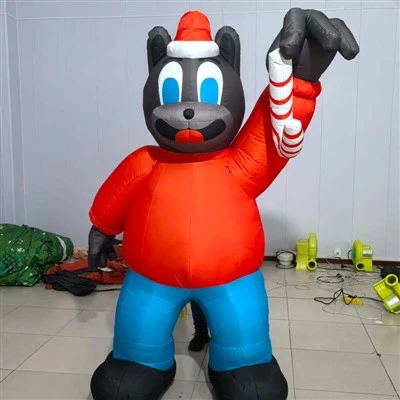
Whether you’re decorating your front lawn for your family, putting up a display for your local community, or planning a big commercial display for a business, inflatable Christmas decorations are a great way to add holiday cheer—you just have to pick the right product and set it up properly to make sure it stays up all season. If you’re looking for high-quality, wind-tested inflatable Christmas decorations, we have a wide range of options for every size and need, and our team can help you pick the right products for your local conditions. Feel free to reach out to our sales team to discuss your requirements and get more details on our inflatable Christmas supplies.
Inflatable Cartoon References
- ASTM International. (2021). Standard Specification for Inflatable Recreational Products for Residential and Commercial Use. ASTM F2922-21.
- National Weather Service. (2023). Wind Gust Impacts on Outdoor Structures. NOAA, U.S. Department of Commerce.
- Textile Institute. (2020). Denier Measurement and Fabric Performance for Outdoor Textiles. Textile Institute Technical Report Series.
- Consumer Product Safety Commission. (2022). Inflatable Toy and Decoration Safety Guidelines. U.S. CPSC.
- University of Extension. (2022). Outdoor Holiday Decor Wind Resistance Best Practices. Agricultural and Resource Economics, University of Minnesota.
Yantai Deco Inflatable Co., Ltd.
We are one of the most experienced inflatable christmas manufacturers and suppliers in China. With a professional production team, we are able to meet the needs of the majority of our customers. Please feel free to buy customized inflatable christmas made in China here from our factory.
Address: No.5, Binglun Western Road, Yantai City, Shandong Province, China
E-mail: sales01@hiinflatable.com
WebSite: https://www.decoinflatable.com/
