As a fire protection valve supplier with over a decade in the industry, I get the same question at least a dozen times every week: “Does the water quality in our system really matter for our valves?” Early in my career, I’d give a simple, reassuring answer—sure, maybe a little, but not enough to worry about. Today, I know that couldn’t be further from the truth. I’ve seen the damage poor water quality can do firsthand: valves that seize up mid-test, leaking that leads to delayed inspections, and even full system failures when a valve can’t open during an emergency. It’s not just a minor detail; it’s one of the most overlooked factors in keeping fire protection systems reliable. Let me break this down like I do for every new client, no overly technical jargon, just real-world lessons from years of working with valves and the water that flows through them. Fire Protection Valve
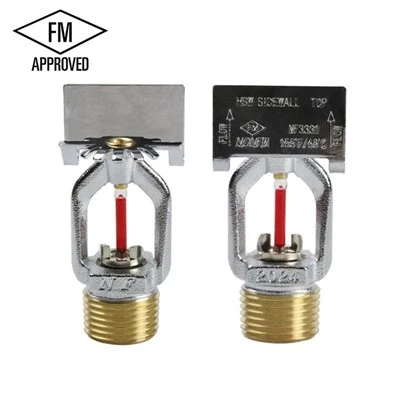
First, let’s start with what fire protection valves do, because if you don’t understand their job, you can’t grasp how water quality impacts them. Our valves—whether they’re gate valves, butterfly valves, check valves, or pressure relief valves—are the unsung heroes of fire safety. They control water flow, isolate sections of a system for maintenance, prevent backflow from sprinklers or standpipes, and regulate pressure to make sure water gets where it needs to be when a fire starts. Most of these valves are made from materials like cast iron, brass, bronze, or stainless steel, chosen for their durability and resistance to corrosion. But even the toughest materials aren’t invincible when exposed to inconsistent water quality over time.
The biggest issue we see is scale and sediment buildup. I recently worked with a client in an older industrial warehouse who had their annual fire inspection fail because two main gate valves wouldn’t open. When we pulled the valves for testing, the inside of the valve body was coated in a thick, chalky scale—mostly calcium carbonate, from hard water. Hard water, which has high mineral content, is super common in many parts of the country. When water sits in static sections of a fire protection system (like in pipes or closed valve chambers for months at a time), those minerals precipitate out, hardening into scale. Over time, this scale builds up on the valve’s moving parts: the gate, the stem, the disc. Before long, it’s like gluing a hammer to the valve—you can turn the handle all you want, but the valve won’t open. In a fire, that means no water flow to the sprinklers, and that’s a life safety risk, plain and simple.
Sediment is another big piece of this. Even in systems that use softened water, there can be fine particles from construction debris, rust from old pipes, or biological matter like algae and bacteria. Algae might sound like a trivial issue, but in stagnant water, it can grow into slime that coats valve surfaces. Combine that with rust from pipe walls, and you get a gritty sludge that wears down valve seals and seals shut small passages. I once responded to a emergency call at a office building where a check valve failed, causing water to back up into the domestic water system. The culprit? Sediment that had accumulated around the check valve’s flapper, so it wouldn’t seat properly. The maintenance team had flushed the pipes, but they didn’t think to inspect the valve—something we always tell clients: flushing alone isn’t enough; you have to check the valves too.
Corrosion is the silent killer here, and it’s not just about hard water. Different water chemistries can accelerate corrosion in valve materials in ways that surprise even experienced facility managers. For example, acidic water (low pH, often from rainwater or chemicals) eats away at cast iron and steel. Over time, this pitting corrosion creates tiny holes in the valve body, leading to leaks. On the flip side, water with high levels of chlorides—common in coastal areas, or from de-icing runoff that seeps into underground pipes—attacks stainless steel. A lot of people think stainless steel is “stainless,” but that’s a myth. Chlorides break down the passive layer that protects stainless steel, causing crevice corrosion in small gaps between valve parts. We saw this last year in a hotel near the ocean: their bronze check valves started leaking from crevice corrosion after five years, way earlier than the 15-year lifespan we typically expect. The water there had 3x the chloride levels we see inland, and that made all the difference.
Backflow prevention is another area where water quality hits hard, and that’s a big deal for compliance. Fire protection backflow valves (also called check valves) are required by most local codes to prevent non-potable water from contaminating domestic water supplies. But if the water flowing through the backflow valve has high levels of sediment or bacteria, those contaminants can get trapped inside the valve’s internal components. That not only ruins the valve’s ability to seal correctly (leading to backflow during an emergency) but can also lead to health code violations. We’ve had clients who failed their backflow inspection because their valve had so much biological growth that it couldn’t pass the pressure test, and that can lead to fines or even having the entire fire system shut down until it’s fixed.
Now, the good news is that this isn’t an inevitable problem. There are steps we take as a valve supplier and that our clients can take to minimize water quality’s impact. First, when we recommend valves for a project, we don’t just pick the cheapest option—we factor in the local water quality. For example, for clients in hard water areas, we might suggest valves with larger stem clearances or coated internal surfaces to resist scale buildup. For coastal properties, we use 316 stainless steel valves, which is more resistant to chlorides than standard 304 stainless. We also work with many clients to set up routine maintenance schedules that include valve inspections, not just pipe flushing. A annual valve exercise (opening and closing each valve partially to keep moving parts free) can prevent a lot of the seize-up issues we see.
I always tell clients that fire protection systems aren’t “set it and forget it” investments. Your valves are only as good as the water that flows through them. That’s why as a supplier, we don’t just sell valves—we offer guidance on how to protect them from water quality issues. If you’re dealing with frequent valve failures, failed inspections, or just want to make sure your system is ready for an emergency, that’s what we’re here for. We can walk you through checking your water quality, evaluating your existing valves, and suggesting the right solutions to keep your system reliable. It’s not just about selling a valve; it’s about making sure your valves do their job when it matters most.
If you have questions about how water quality is affecting your fire protection valves, or you’re looking to upgrade your system to be more resilient, feel free to reach out to our team to discuss your needs and find the right solutions for you.
Flanged Gate Valve References
- National Fire Protection Association (NFPA), "Standard for the Installation of Sprinkler Systems," NFPA 13, 2022.
- American Water Works Association (AWWA), "Water Quality and Corrosion Control," AWWA M4, 2017.
- Fire Protection Research Foundation (FPRF), "Effects of Water Quality on Fire Protection System Components," 2019.
- International Code Council (ICC), "International Fire Code," 2024.
- Steel Structures Painting Council (SSPC), "Surface Preparation Standards for Corrosion Protection," SSPC-SP 10, 2021.
Nonfir Automatic Sprinkler Co., Ltd.
As one of the most professional fire protection valve manufacturers and suppliers in China, we have world-leading production equipment and strong manufacturing capabilities. Please feel free to buy advanced fire protection valve at competitive price from our factory.
Address: No.8, Yuanfeng Road, Meiyuan Village, Kangmei Town, Nan’An City, Quanzhou City, Fujian Province, China
E-mail: info@nfsprinkler.com
WebSite: https://www.nonfirsprinklers.com/
