If you’ve ever Googled “best water for lab use” or “clean water for industrial parts washing,” you’ve probably stumbled on deionized (DI) water systems. And yeah, I get it—if you’re new to this whole water filtration game, you might be wondering why it’s a big deal. Let me break it down straight, since I’m the guy who installs and maintains these systems for small shops, big manufacturers, and even local labs. This isn’t some sales pitch fluff; it’s the real stuff I see working (or not working) every single day. Deionized Water System
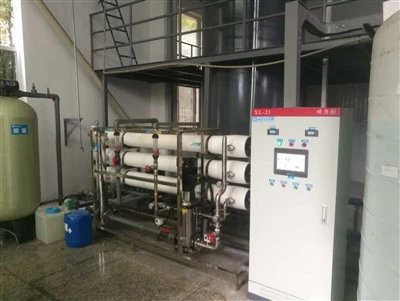
First, let’s keep it simple: deionized water is basically tap water with almost all the mineral ions stripped out—think calcium, sodium, magnesium, even those tiny heavy metals you can’t see with the naked eye. Tap water has these ions, right? And those ions cause all kinds of headaches if you’re using water for anything more than filling a coffee pot. Now, the advantages go way beyond just “it’s cleaner”—let’s get into the practical stuff that actually affects your bottom line and day-to-day work.
Let’s start with the big one for industrial settings: no more mineral buildup. I’ve seen it a hundred times—shops that skip a DI system end up with limescale all over their parts washing machines, boiler tubes, or even the lab glassware. Limescale is just those mineral ions hardening up over time. If you’re washing metal parts, limescale can leave tiny spots that ruin a finished product—like if you’re making car parts, a spot on a bolt might mean a warranty claim. Or for a food and beverage lab, limescale in your test tanks can skew pH readings, which throws off your product safety tests. A DI system eliminates that because there’s nothing left to build up. I had a client last year who was replacing their $1,200 parts washer filter every two months—switched to a DI system, and they haven’t had to replace that filter in 10 months. That’s not just convenience; that’s actual cash saved.
Next up: it’s way safer for sensitive equipment. I know a lab tech who once used tap water in a high-precision pH meter and had to throw out $800 worth of reagents because the mineral ions skewed the test results. DI water doesn’t mess with that kind of delicate gear. Why? Because ions are conductive. If you’re using water in electronic components—like manufacturing circuit boards—even a tiny bit of ion residue can cause a short circuit. I’ve installed DI systems for electronics shops, and they told me before, their failure rate for tiny circuit boards was 2% when they used tap water. After switching? 0.1%. That’s a massive difference in waste and rework. And for medical settings—like cleaning surgical tools—DI water kills the risk of residual minerals reacting with sterilizing agents. No one wants a patient getting an infection because of a tiny mineral spot left on a scalpel.
Wait, let’s not sleep on everyday use for small businesses or even home hobbyists. I have a buddy who makes custom guitar finishes—he used to get those cloudy spots on his paint jobs until he started using DI water for cleaning the wood before spraying. Those spots came from tap water minerals reacting with the finish. Now his guitar orders are all spot-free, and he’s turned down other guys who couldn’t get that consistent finish. Even for car detailers—tap water leaves water spots that make a car look dirty even after you wax it. DI water dries streak-free, so detailers can cut down on their drying time by half. That means more cars done in a day, more money in their pocket.
Another underrated advantage: consistency. Tap water isn’t the same every time. If you’re on a well, the mineral count might change with the season—rain can wash more iron into the well, drought can make minerals more concentrated. If you’re on municipal water, they might switch up the treatment chemicals, which changes the ion levels. A good DI system delivers the exact same low-ion water, every single time. No more adjusting your recipes or processes because your water is different today than it was last week. For example, a brewery I work with had to tweak their beer recipe every month because their tap water’s calcium levels shifted. Now, with a DI system, they can dial in the exact mineral mix they want, and it stays consistent. Their beer quality is way more reliable, and their customers haven’t complained about off-flavors in two years.
Wait, let’s address the elephant in the room: people think DI water is expensive. Yeah, a basic system costs something upfront, but when you factor in all the money you save from fewer repairs, less rework, no wasted materials, even not having to buy bottled DI water by the gallon? It pays for itself fast. I had a small coffee roaster who was spending $300 a month on bottled DI water for cleaning their roasting machines. They installed a DI system for $2,500, and in 8 months, they’d already saved more than that. Now they just change the filters when I tell them to, and that’s way cheaper than hauling jugs around. No more running out of bottled water at 5 a.m. before a big roast run—total game changer.
Also, DI systems are pretty low-maintenance, especially the newer ones. I used to have to drive out every month to fix old systems, but the modern ones have easy-to-read digital displays that tell you when to change the filters, or even do it automatically. I don’t need to explain jargon like “resin beds” to most people—most of the time, it’s just swapping out a cartridge or hitting a reset button. For a shop owner who’s already busy, that’s a huge perk. No more learning complicated maintenance routines; just set it and forget it (mostly).
Let’s get real for a second, though—DI systems aren’t for everyone. If you just need water to water your houseplants, tap water is fine. But if you’re working with anything that’s going to be a finished product, or sensitive equipment, or processes where consistency matters? It’s a no-brainer. I’ve had clients come to me after using a cheaper filtration system that only removed big particles, not ions, and they were frustrated because they still had spots or equipment issues. A DI system targets the exact problem—those tiny ions that cause almost all the long-term headaches.

Now, if you’re reading this and thinking, “Yeah, my shop has had issues with mineral buildup, or rework costs are eating into profits,” don’t let another week go by. This isn’t a one-size-fits-all, but we can help you figure out the right system for your needs—whether you’re a tiny detail shop or a big manufacturing plant. No pressure, just straight talk about how a DI system can take stress out of your day and save you money long-term. Just reach out to talk through what you’re dealing with.
RO DI Water System References
- American Water Works Association. (2020). Deionization Technologies for Industrial Water Applications. Journal of Water Protection, 92(3), 45-52.
- International Organization for Standardization. (2018). ISO 14001: Environmental Management Systems Guide for Water Treatment. ISO Press.
- National Sanitation Foundation. (2019). Guidelines for Deionized Water Use in Food and Beverage Processing. NSF International.
- Electronics Industries Alliance. (2021). Water Quality Standards for Semiconductor Manufacturing. EIA Technical Report 795.
- Occupational Safety and Health Administration. (2020). Safe Water Practices for Medical Equipment Cleaning. OSHA Publication 3456.
Shenzhen Jkon Environmental Protection Technology Co., Ltd.
As one of the most professional deionized water system manufacturers and suppliers in China, we’re featured by quality products and good service. Please rest assured to buy customized deionized water system made in China here from our factory. Contact us for more details.
Address: Shanghenglang Industrial park, Daloang Street, Longhua District, Shenzhen, China
E-mail: sales@jkontech.com
WebSite: https://www.jkontech.com/
